

The invigilator
An interview with Jacinta Maude
Jacinta Maude works as an experience team member, aka invigilator, at the Australian Centre for Contemporary Art (ACCA) in South Melbourne. She is currently working Are you lonely tonight? I’m so lonesome I could cry, curated by Sophie Prince and Myles Russell-Cook. Jacinta is an ex-corporate worker turned artist. She’s resolute and comfortable with the quiet, engaging with solitude as a form of conversing with contemporary art, inviting the same from others.
As an invigilator, Jacinta wears many hats, from receptionist to protector of the art to contemporary art translator to content monitor. Jacinta focuses on making people feel comfortable within the gallery, engaging with how the art makes people feel—she’s effectively the onsite armchair psychologist. Jacinta’s steadfastness makes her the perfect temperer of the space, handling the switches from busy foot traffic to complete vacancy.
Standing across from Polly Borland’s BOD (2023), Jacinta walked me through her experience working the Loneliness exhibition.
What compels you to work here?
I had been working in a corporate role for many years, and this is the easiest jobs I’ve ever really had. I do it because I want to be with the artworks.
It’s interesting that when an exhibition first opens often it’s the works that I struggle with most that become my favourites. I like things that move beyond the aesthetic to a deeper conceptual interest.
What does time feel like within this space?
For me it changes a bit. I can have days where it feels like it just goes on forever—that time is moving really slowly.
When we have our breaks, I’m keen to get outside because I never know what's going on [outside]. I am the type of person that likes to be able to see beyond where I am, so it does sometimes feel a little bit suffocating. I do feel like I sit with my thoughts more because of that.
Then there are days where time can move quite quickly. I think those days are when we’re engaging with each other. This [exhibition] there’s been less [interaction] because of the nature of the show. We are all separate and it’s been really busy. It’s the busiest exhibition I’ve worked at since being at ACCA, and I started working here as a volunteer in 2022.
You become a part of the exhibition, a solitary figure within the space highlighting loneliness. What is it like to be amongst the artwork, acting as a vessel of this theme?
I’ve never felt lonely in this exhibition. There have been times when I’ve actually just appreciated being in this space. I don’t consider myself to be a lonely kind of person. I’m just at that age where I’m enjoying my solitude.
You know, we all feel lonely, don’t we? I’m sure there have been times where I’ve felt lonely. I don’t think it’s been affected by the exhibition.
I’m really good at turning off. I have a lot of thoughts on my mind.
What is your focus whilst attending? Has this exhibition made space for different focuses?
Our role is to make people feel comfortable, [especially] if they’ve not been in a contemporary art space before. Sometimes people find it difficult to respond to [contemporary art] works.
I don’t know if you’ve been to Europe; attendants will follow you around if they think you're going to touch the work. Yeah, so that’s what we try not to be. [We want to] find that nice balance, keeping everyone safe, keeping ourselves safe, and looking after artworks making sure nothing is getting damaged.
I’ve not had as much [engagement from attendees] in this exhibition. I don’t know whether it’s because people are being more contained because of the content.
There are a lot of first-time visitors to ACCA coming through than I’ve experienced before. I think the nature of the content is more appealing to a wider audience.
Have you witnessed any visitors’ interactions to the art that has been surprising or any significant emotional or physical responses?
There was someone who was crying yesterday at Kelly Yu’s work [Endling 2024]. There’s been a couple of people who've felt quite emotional about that.
There’s been some comments made about the goldfish [in an empty tank at the entrance of the exhibition]. People are feeling that he’s lonely.
There was a woman who wanted to know if anyone had tried to eat the hot dog [a part of Seth Brown’s Frank 2024] because it ‘smelt so good’. I just went, ‘No, I wouldn’t want to eat a hot dog that’s been twirling around for several hours, uncooked.’
Last Sunday I did an ‘art in focus’ tour with a group of seniors and it was really lovely because they were quite excited to be here and quite interested in the works. We invited them to hang out for a cup of tea and biscuits later. I love [bringing community together], when you can see them talking amongst themselves. It’s really lovely.
What mediums do you work with in your own art? Does spending so much time in a contemporary art gallery affect your artistic expressions?
I do painting, sculptural works using porcelain and unfired clay, but I usually [work with] found or collected objects. In fact, I’ve got a sculpture in the Deakin’s Contemporary Small Sculpture Awards.
When you’re sitting here for so long you can’t help but think about a work and how you might have responded to the topic.
What would I do?
How does that relate to my own work?
I think it does affect my work [in exhibition curation].
Would I have curated it that way?
How do the works relate to each other?
Being able to sit for so many hours with artwork is really valuable to me.
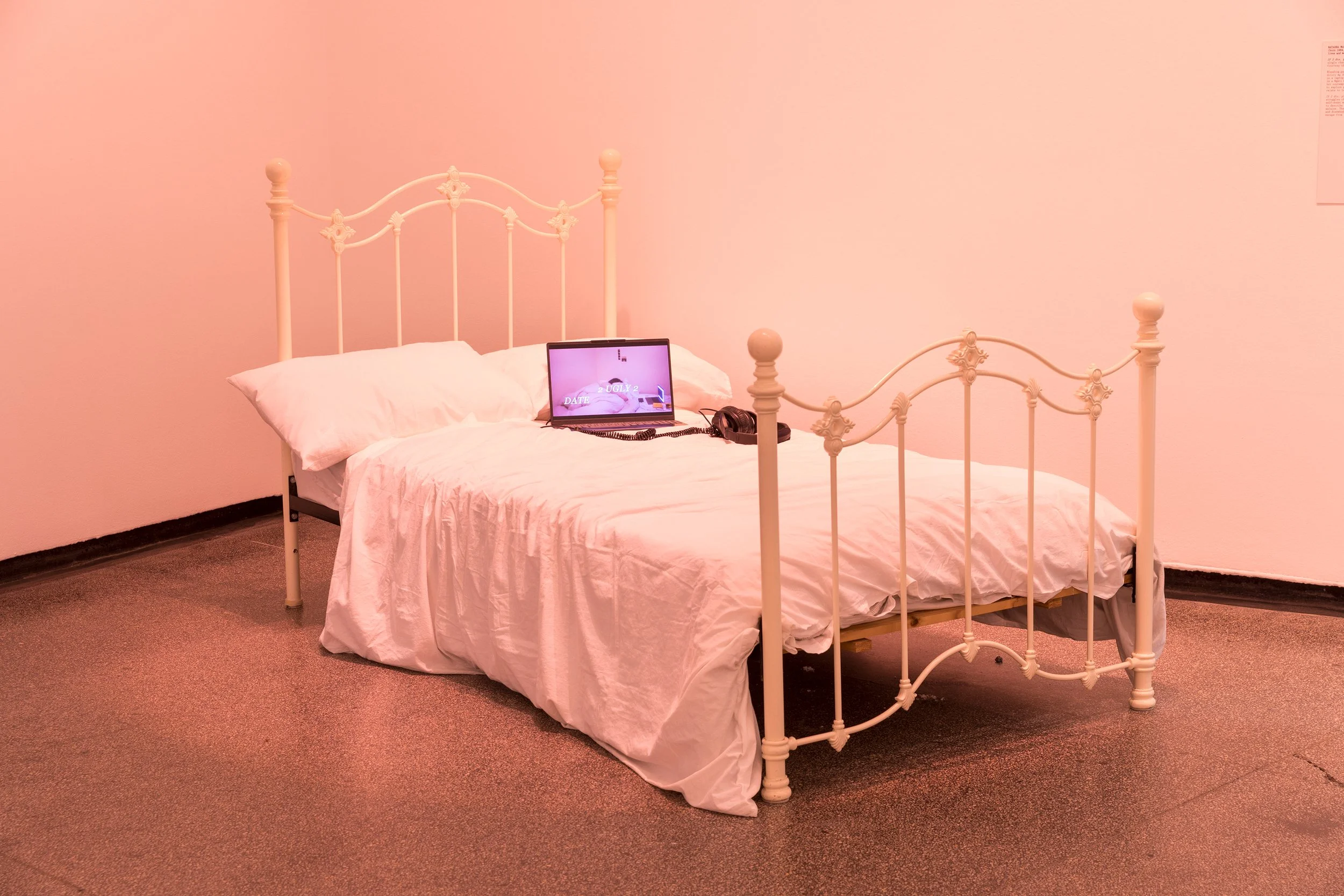
Image credit:
Natasha Matila-Smith, If I die please delete my Soundcloud 2019, installation view. Australian Centre for Contemporary Art, Naarm/Melbourne, 2026. Courtesy the artist. Photograph: Andrew Curtis