INDUSTRY
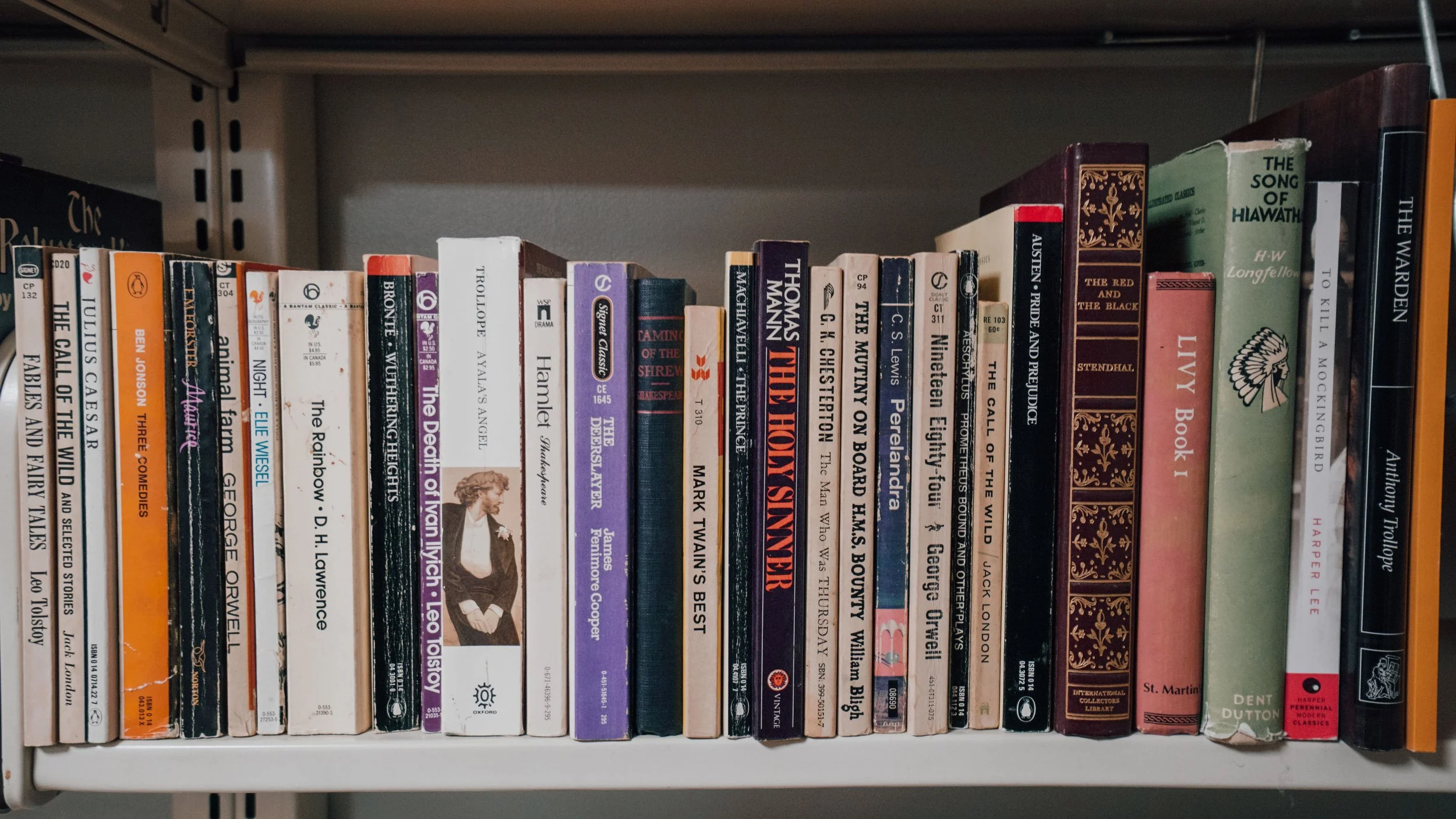
In competition: How brick-and-mortar booksellers compete with online retailers
by Claudia Carlton-Allen, Angelo Koulouris and Sebastian Marie-Paterakis
The rise of multinational online retailers has transformed the Australian bookselling industry, reshaping how consumers engage with books. Platforms such as Amazon Australia have introduced competitive pricing, fast delivery, and algorithm-driven recommendation systems that challenge the sustainability of brick-and-mortar stores. Despite these pressures, Australian independent booksellers continue to survive by prioritising in-store experiences that centre on personal engagement and community. Independent booksellers have adapted within a constantly evolving market; their retail models remain successful alongside multinational online conglomerates.
Diversification/specialisation
Independent booksellers may never be able to compete with online competitors due to their amounts of stock and ease of access. Instead, independent bookstores should focus on differentiating and specialising their stock. In doing so, independents may find a niche for themselves as customers may opt for a business whose catalogue is curated to their tastes.
In 1970, Angus & Robertson introduced franchising. This paved the way for the rise of chain bookstores with the introduction of Dymocks in 1986 and Borders in 1998. The growing presence of large franchise bookstores created pressure for independent retailers competing within the Australian bookselling market. Joe Rubbo, managing director of Readings, recalled that one of the company’s most challenging moments occurred in 2003 when Borders announced it would open across from its Carlton store. Speaking on INTHEBLACK Out Loud, Rubbo explained that despite the arrival of the American chain retailer, Readings ultimately succeeded, with the experience reinforcing the ‘importance of community’, for the independent bookselling industry.
Independent brick-and-mortar stores should therefore expand beyond their primary function and consider adopting a hybridised business model. This may include selling other forms of media, or even beverages such as coffee and tea. This diversification not only enhances the browsing experience for customers but ‘maximise[s] those qualities which online bookshops lack’, mainly: atmosphere, curation and social interaction.
Integrating offline and online
Research suggests that the line between online and offline commerce for contemporary bookselling businesses has blurred. Laing and Royle found that 53% of traditional store shoppers also buy online, and that 97% of online consumers shop at traditional stores as well—demonstrating that the two channels are complementary rather than competing, and that there is little to no distinction between the online shopper and the on location shopper. Furthermore, 57% of online bookstore users check availability online before purchasing in a traditional store, while this pattern appears in the opposite direction, with 69.3% of brick-and-mortar shoppers browsing in-store before purchasing online. Here, we can conclude that price point is a primary concern for customers opting to shop online.
In 2011, the closure of Angus & Robertson’s physical stores marked a significant moment in the Australian bookselling industry, prompting concerns about the growing influence of online retail platforms. Operated by REDgroup Retail, the company ‘accounted for 20% of Australia’s $1.6B book market,’ making its collapse worrying. While media outlets associated the closure with the rise of online retailers offering cheaper prices and convenience, Been argues the failure also resulted from ‘debt and a fatal combination of basic retail pressures’, highlighting the financial instability of bookselling companies during the rapid expansion of online retail platforms.
Customer experience
The in-person customer experience is something that may be considered an advantage traditional retail has over online alternatives. This could be accomplished by specialising in, or curating a particular niche, or simply by enhancing the design, function or aesthetics of a physical space. This concept also extends to customer service through personable interactions, quality service or recommendations. It is argued this ‘retail experience’ positions customers to more ‘buy on impulse’ when in-store; with customers 59.1% more likely to do so in traditional stores as opposed to just 10.2% online.
The launch of Amazon Australia in 2017 intensified concerns surrounding the future of independent bookselling in Australia. Amazon’s algorithm systems highlighted unique user personalisation, recommending products based on individual data patterns. This exposed ‘incomparable convenience, and competitive prices, [which is] what has set Amazon apart as a bookseller.’ For independent bookstores, this has increased pressure to compete not through price but through community engagement and personalised experience.
Jackie Money, Melbourne University Press
Opened in January of 2020 and located in the suburb of Eaglehawk, Trash Cult is independently managed and operated by co-owners Lorelle Hickson and Mick Derrick. Primarily a record store, Trash Cult’s stock also covers books, magazines/zines, DVDs and tapes, the back of the store also housing a bar that hosts live music regularly. ‘Trash Cult is quite unique … we don’t know of a similar place that we can use as a template or guide for a business model.’
Diversification/niche
Trash Cult is able to benefit from their diversified stock, as they still regularly reach customers who do not collect vinyl records. Trash Cult appeals to niche, experimental and/or transgressive subcultures, with a significant aspect of their business being catered to customers seeking rare, collectable and hard-to-find media. Trash Cult, like its client base and stock, may be considered ‘left of mainstream’, where its lack of appeal to the general public is the basis for its own community. ‘If Trash Cult appealed to everyone, the sense of community would probably not exist.’ While these niche audiences are often returning customers and may be willing to pay higher prices for hard-to-find items, they do present a challenge from a business standpoint as they are small. ‘We will never be a super successful business in terms of financial viability. But it also means that for the patrons who have us in their heart … that it is a sacred space.’ Considering this, some concessions have been made to attract customers with more generalised alternative tastes. ‘As we are such a small business, with more niche artists, we have started to pivot slightly to include more ‘saleable’ albums, but not enough to dilute the essence of our business.’
The business also typically hosts live events every Saturday night in what they call a ‘micro-venue’, that has a capacity of around 45 people. ‘The benefit of having a bar/live music is that we can keep our doors open to the retail space and continue trading … often [we will] have people purchase stock while attending gigs.’ The bands/artists that play at Trash Cult receive all the money from ticket sales, the venue only receiving money from drink sales ‘which fluctuates wildly depending on the night.’ Hickson and Derrick do not employ any staff while hosting events, as between public liability insurance and various other costs, the margin for profit is thin enough as is. ‘I do not feel like this would be a tenable approach for other businesses at all.’ Independent booksellers may wish to consider diversifying their stock and/or hosting live events, as this may attract customers that would otherwise be unaware of the retail space. Furthermore, while specialising a business in a particular niche may be an excellent way of garnering a loyal customer base, retailers should still attempt to appeal to a broader audience.
Integrating offline and online:
Trash Cult also maintains and operates an online store, where customers can browse and purchase from their catalogue, as well as purchase tickets for upcoming events. Derrick and Hickson also maintain a steady social media presence for the business where they receive regular engagement from their followers. ‘[It’s] common for customers to find us through social media, or via the website, then visit in person … I suppose in that regard, that is the closest we get to being on a similar playing field with something like Amazon.’ To that end, Trash Cult’s online presence allows customers searching for a particular niche item, to discover the store, and by extension, a catalogue of media catered to their niche. ‘If a potential customer searches for a particular item, there is a chance that a person could be exposed to our store and, sparked by their curiosity, continue down the Trash Cult rabbit hole!’ While the searching and purchasing habits of internet-savvy niche audiences do benefit Trash Cult, they also place the business in direct competition with other online retailers in a highly competitive market. Large multinational retailers such as Amazon, and online second-hand marketplaces such as Discogs and eBay, place pressure on independent retailers like Trash Cult to keep prices low. ‘The mark-up on new vinyl, and therefore our profit margin, is very minimal.’ Derrick and Hickson work other jobs, only operating the store in limited hours on Fridays and Saturdays. As such, regular maintenance of Trash Cult’s online storefront is an issue and the time required to update stock online ‘could definitely be a full-time job on its own.’
Like record stores, for independent bookstores ‘the expectation is that there is an online presence and shopfront.’ And certainly, in establishing one, brick-and-mortar bookstores should expect an increase in brand awareness; as online shopfronts may greatly expand a business’s client base beyond those aware of its physical location. Independent bookstores should also be aware that maintaining an online storefront is a significant time commitment and that without the experience of visiting a physical location, savvy online shoppers may opt for cheaper alternatives.
Community
Trash Cult has established a community of fans and supporters who ‘end up chatting about music’ a ‘continued interaction’ even after they have ‘left the building.’ In July 2024, proposed licensing conditions from the Greater Bendigo City Council forced Trash Cult to suspend live music events. Hickson and Derrick contended that an incorrectly granted licence and the council’s proposed conditions threatened the business’s survival. Backed by their community, local and international artists, and over 2,000 petition signatures, Trash Cult secured an amended licence, allowing them to resume live music in early 2025. Independent bookstores wishing to develop a community, should consider specialising in a particular niche or sub-culture, as over time it may become a ‘hotspot’ or destination for people who engage with that culture. This may prove to be vital for smaller independent stores, as communities, like Trash Cult’s, may be essential in mitigating the impact of external, business related hardship.
Customer experience/uniqueness
Although competitive, price point may not be the main reason customers choose to shop at Trash Cult. Customers of a certain niche value the customer specific experience only a physical location may grant. ‘It is the reason we exist. The community, the feeling of holding a tangible item, something that not only you find value in, but other people around.’ This experience is core to what draws these customers in; as customers choose to do so because of the uniqueness of Trash Cult and its offerings. ‘In Bendigo alone there have been multiple businesses that have tried to recreate Trash Cult and have been very open about that. However, they have not lasted; instead of recreating something that already existed, had they created something different, they would have found their space.’
Independent booksellers should cater their stock, service and venue to cater to the ‘experience’ of the customer; shoppers may be happy to pay more to engage with a space that they identify with. Bookstores looking to do this should consider differentiating themselves from other established businesses, as this may be a deciding factor for customers weighing their options.
Findings
Independent book retailers should have a strong online presence. Whilst low prices and convenience offered by multinational online retailers are a significant challenge for independent booksellers, customers desire unique shopping experiences which drives them toward alternatives that independent brick-and-mortar booksellers. By specialising stock, physical space and customer service around a particular niche or audience, independent booksellers may develop a customer experience and community that meaningfully differentiates themselves from online competition. To this end, independent booksellers might also consider hosting live events, which greatly contributes to a sense of community. While these practices have the potential to greatly benefit a business, independent bookstores looking to specialise/diversify should consider the costs involved. In today's market, it is the personable, unique and communal aspects of brick-and-mortar bookselling that differentiates it from its online competition.
Jackie Money, Sales and Marketing Director of Melbourne University Press (MUP), has provided a fundamental perspective to our research, highlighting the centring of brick-and-mortar stores within a space that also values online retailers. Though it is vital, it is still only one perspective and therefore cannot be taken as a representative of her field.
Algorithms and discoverability
When reflecting on changes within the bookselling space, Money explains that sales data was unavailable before 2014, noting that this changed with the introduction of a research service, NielsonIQ BookScan, where point-of-sale data is collected from book retailers. Since its introduction, Money highlights that metadata has become ‘really crucial,’ with chain retailers relying on metadata to drive sales and online store activity. Money contrasts this use of data with Amazon’s approach to product visibility on their online platform. Amazon however, prioritises ‘bytes’-based data, which favours simplified inputs to optimise its recommendation systems.
Money explains that promoting books online involves selecting ‘a variety of keywords based on … the book content … and who the reader is.’ However, this strategy differs on Amazon, where publishers’ search optimisation is reflected from the perspective of the customer. This includes search terms an Amazon user might enter, rather than key terms used in broader search engines like Google, establishing Amazon as a dominant ecommerce force, distinct from other online retailers.
Competitors
Money identifies several factors that challenge Australian independent booksellers when competing with multinational online retailers like Amazon. Firstly, she points to the ‘economic environment’ propelled by COVID, during which physical stores were forced to suspend in-store operations. Secondly, she highlights differences in customer behaviour and business models. Amazon appeals primarily to customers seeking lower prices, with the platform able to heavily discount books due to customers purchasing multiple products across its wider retail system. An examination of Amazon’s homepage further reflects this business model. When accessing the Australian site, the homepage displays large promotional banners advertising discounted products. These advertisements emphasise volume purchasing and cross-category consumption rather than books alone. Money argues that independent booksellers cater to customers motivated by a ‘love of books’, who value curated selections and personalised recommendations ‘instead of being influenced by an algorithm.’ This distinction highlights how independent bookstores compete not through price, but through expertise, curation and community-driven customer experience.
When reflecting on MUP’s relationship with independent bookstores compared to online retail platforms, Money explains that members of the Australian Bookselling Association (ABA) purchase the highest volume of MUP titles. Money argues this is ‘because Amazon [isn’t] interested in scholarly nonfiction because that’s not commercial and that won’t get to the broadest possible audience.’ She notes that Amazon Australia contributes only ‘10%’ of MUP’s overall book sales, demonstrating the publisher’s limited reliance on the platform. However, Money suggests this dynamic would differ for larger publishing houses producing more commercially successful genres such as ‘blockbuster romance, crime, or … fiction’, where Amazon would likely represent a much larger proportion of sales revenue. In this way, MUP prioritises independent booksellers, whose emphasis on curated and niche literary content remains critical to MUP’s commercial sustainability.
Community
When Money prepares a book title to pitch to booksellers, she intends to make ‘them as informed as possible as to why this is a good book for them to have in their store.’ Money highlights that Australian independent booksellers often prioritise strong local identity and reader familiarity when selecting titles. Unlike algorithm-driven recommendation systems on large online platforms, these interactions rely on human judgement and local knowledge, reinforcing the value of community when driving purchases and maintaining the relevance and necessity of physical bookstores within the Australian publishing landscape. Money refers to Amplify Bookstore, a brick-and-mortar store in North Melbourne that stocks Black, Indigenous, and other people of colour (BIPOC) authors. Starting from social media, their business transformed into a physical store. When comparing local bookstores with Amazon, Money states ‘that’s the thing Amazon can’t buy. They can’t buy community. And while … local booksellers will never sell the kind of volume that Amazon will for them, that’s not the point.’
Laura Dean, The Leaf Bookshop
The Leaf Bookshop is an independently owned bookstore located in the suburb of Ashburton. The store was first opened in 2016 by co-owners, Katy and David, who noticed a lack of bookstores in the area outside of traveling to distant shopping centres. Recently, ownership has been passed down to long-time employee Laura Dean who has been working at The Leaf Bookshop for almost six years. Since then, Dean has been active in reinvigorating the store by organising local community events, improving the book buying experience for customers, and prioritising social media marketing.
Community
Independent booksellers need to forge stronger connections with their local community. In her interview, Dean explains that The Leaf Bookstore has ‘always had a bit more of an older demographic at around 40 to 50 plus, [as well as] families with young children.’ Since taking over, Dean has been trying to target the young adult demographic by ‘[encouraging] a really good community feel, so [she has] been putting on events [such as] author evenings, book clubs [and] games nights.’ Dean’s strategies to attract new customers align with the research of Raffaelli and Noe, who argue that independent booksellers can achieve success by using their stores to facilitate social events and anchor themselves as an important part of the local community. In addition to building stronger connections with customers, The Leaf Bookshop also partners with nearby primary schools, helping to recommend children’s books and ‘stock their libraries.’ This partnership helps bring visibility to the business and encourage both children and parents to shop at their store. By focusing on expanding their customer base, organising social events and forming partnerships with local institutions, Dean has positioned The Leaf Bookshop as an important social hub within the Ashburton Village.
Curating a positive book buying experience
Independent ‘booksellers [can capitalise] on [the] aesthetic materiality of books by architecting [their] environment in ways that would both highlight and enhance their products.’ The Leaf Bookshop has undergone several changes to its interior design, aiming to create ‘a very inviting, welcoming space’ that feels ‘cosy and safe’ for customers. Dean admits that an ulterior motive to ‘adding all these decorations was to make the bookstore a very Instagramable kind of place’, designed to appeal to younger demographics as they value the aesthetic qualities of a bookstore. As Li contends, ‘the atmosphere of the bookshop is crucial in enhancing a customer’s experience’ and The Leaf Bookshop distinguishes itself from its chain retailer contemporaries through its verdant, creative and cosy design.
Digital spaces
In an increasingly digital world, many analysts had predicted the eventual death of independent brick-and-mortar bookstores due to the rise of multinational retailers such as Amazon, unless they could establish an online presence for themselves. The Leaf Bookshop maintains a virtual storefront through their website, allowing customers to order books online and have them delivered by mail. This service does not function as a replacement for the physical store, but rather as an alternative option complementary to the bookstore, for customers ‘that can’t get to Ashburton or live further away.’ When asked about if their physical or online storefront receives more customers, Dean answered that there are ‘definitely more people coming in person’ and that their website might receive ‘on average one or two [orders] a day.’ These answers suggest that local customers prefer the atmosphere of shopping at the physical store rather than utilising their virtual storefront, however, this can also imply that the website is failing to attract customers that live outside of the Ashburton area. As Dean suggests, ‘it is impossible to fully compete with something like Amazon’ which sells books online at heavily discounted prices, therefore, her ‘main priority is getting people to actually come to the store.’
For this reason, Dean has ‘focused a lot on [their] social media … trying to create engaging content that customers or random people can really connect with.’ Having hired someone to operate their social media accounts, The Leaf Bookshop posts almost daily on both Instagram and Facebook about upcoming community events, uploading short book review reels and for advertising Friday games night. Dean’s emphasis on social media illustrates the importance of independent bookstores utilising digital means of connecting with consumers, as by producing these reels and posts, she hopes that it can make consumers ‘want to follow us, make them want to come to the store.’