INFLUENCE

The rise of participatory book reviewing
by Macy Tofler and Silpa Hariharan
Book reviewing plays a significant role in shaping how literature is understood, valued and circulated within society. Reviews guide readers by giving summaries and opinions, representing authors by placing their work in a literary context, and acting as critics by judging the quality and strengths of their works. It is one of the most influential tools of the publishing industry.
Book reviewing has evolved along with the industry, changing not only how reviews are written, but also who gets to write them and how they reach readers. The shift from print to digital spaces has been a major part of this change. With the rise of platforms such as Goodreads and TikTok, book reviewing has moved from newspapers and magazines to more participatory, reader-driven spaces. These platforms allow everyday readers to share their own reviews alongside professional critics, creating a more informal, personal and socially influenced reviewing culture.
Before looking at the impact of participatory reviewing, it is worth looking back at how book reviews have changed over time. Understanding what changed, and why, helps us see how the current form and function of reviews have evolved, what they do differently today and what this means for readers as well as the publishing industry.
The evolution of book reviewing
Traditional book reviewing in Australia
After the Second World War, traditional book reviewing in Australia developed within a print-based, institutionally controlled media system. Reviews were mainly published in newspapers (The Sydney Morning Herald, The Age) and literary magazines (Australian Book Review, Overland), which operated within a gatekept system that prioritised expert judgement and structured literary evaluation. From the late 1940s to the 1970s, book reviews shifted from short, descriptive summaries and casual opinions towards more critical, interpretive and analytical forms of literary evaluation. Traditionally, Australian book reviewing had certain limitations despite its development towards a more analytical and professional practice—such as space restrictions in newspapers—which often limited detailed literary analysis. As a result, some reviews remained descriptive and inconsistent, or focused more on entertainment value than critical evaluation. These issues and the challenge of balancing accessibility with serious literary criticism continued to influence reviewing practices.
Traditional book reviewing has also faced other challenges from media conglomerates, commercial pressures and the divide between academic critics and general reviewers. This separation creates inconsistency in book evaluation and reduces trust in reviews, as publishers often encourage positive or safe reviews to support sales, making traditional reviews more promotional than critically independent. Early print reviews were often overly polite and lacked strong critical judgement, relying on mild praise rather than honest evaluation. Clearly, institutional criticism was already limited in its depth and independence.
Participatory culture and reader-generated book reviewing
As online spaces became part of everyday reading culture, readers increasingly began to rely on the opinions and experiences of others when choosing what to read. Reader-generated book reviewing has become integral to modern reading culture through platforms such as Goodreads—where readers can rate and review books instantly, making reviews highly visible, widely influential and globally connected—and TikTok (specifically BookTok). Even traditional print media has adapted to digital culture, by creating websites to publish their reviews, allowing them to still publish long-form reviews and reach global audiences.
Research by Chevalier and Mayzlin explains that reader-generated reviews have a direct impact on book sales. Books with more positive reviews tend to perform better in sales rankings, while negative reviews, especially one-star ratings, can significantly reduce sales. In this context, book reviewing can be understood through Jenkins et al.’s idea of participatory culture, where audiences act as both consumers and producers of content. However, reader-generated reviews are also shaped by commercial pressures, marketing strategies and platform visibility. Although platforms such as Goodreads appear democratic, reader-generated reviews can still be influenced by promotional activity, review attacks, and harassment, challenging the idea that these reviewing spaces are entirely fair or unbiased. Overall, participatory culture has made book reviewing more open and accessible, but it has also introduced new inequalities and power struggles.
Goodreads: where readers become critics
Launched in 2007, Goodreads is a hybrid social networking and book discovery platform that allows users to rate, review and track finished books while engaging with other readers. These reviews are useful for readers, publishers and librarians, and can inform purchasing decisions, book selection and library acquisitions. Therefore, it operates as both a reading community and a cultural database.
The Distant Hours
Kate Morton’s The Distant Hours provides a useful example of how readers use Goodreads to review and discuss books, as well as how these reviews can influence what others choose to buy. The Distant Hours is a widely-discussed Gothic novel published in 2010. There are still ongoing reviews and discussions on Goodreads, showing its continued popularity among readers. The book has received over 85,000 ratings and more than 8,000 written reviews, with an average rating of 3.89 (Goodreads 2026).
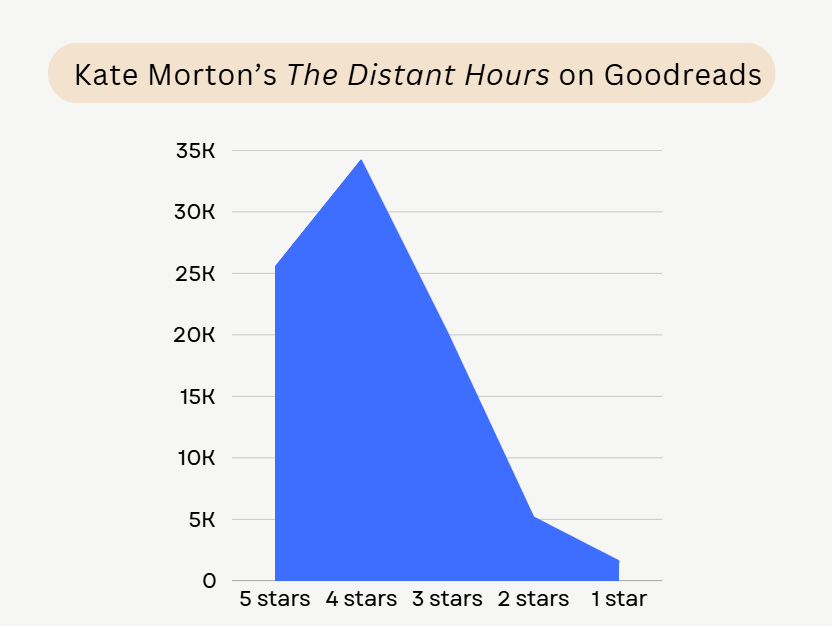
To see how the reviews differ in content and form, two reviews from each star rating were selected between 2011 and 2022. The reviews show a clear shift in how The Distant Hours has been discussed over time. Early reviews (2011–2013) are longer and more analytical, focusing on literary discussion, narrative structure, pacing and characterisation. They often resemble traditional book reviews, with a formal tone and detailed evaluation of the text. For example, reviews by Cryssa (2011) and Veronica (2011) critically examine the writing style and story development. In contrast, later reviews (2016–2022) are shorter, more conversational and emotionally driven. They focus more on personal reading experience, often using informal language and humour.
To see how the platform shapes the form of a review, it can also be compared with Lee Peoples’ 2012 review in Agenda Magazine. Published in an online magazine rather than a reader-driven platform, the review follows a more structured format, with detailed discussion of the novel’s themes, writing and Gothic genre. Phrases such as ‘historical fiction in true gothic style’ and ‘replete with all of the elements of the genre’ reflect its descriptive and evaluative approach, following the conventions of traditional book reviewing.
The function of reviews
Goodreads has no formal editorial gatekeeping or fixed critical standards, meaning that anyone can contribute regardless of expertise. The comment sections demonstrate that readers are often guided by others’ opinions in deciding whether to read or not read a book. This can include choosing to abandon a book, known as ‘Did Not Finish’ (DNF), or adding it to their Goodreads ‘To Be Read’ (TBR) list.
Some examples of responses to the reviews are:
‘Thanks for saving me a few bucks.’
‘Your review gives me the courage to DNF.’
‘By your review, this book sounds like one I must add to my TBR list.’
A high volume of reviews and visible star ratings creates a sense of legitimacy that can increase readership, while negative may discourage engagement. Research by Maity et al. shows that user engagement behaviours on Goodreads, such as tracking reading activity and social interaction, can predict a book’s success as a bestseller more effectively than ratings alone. Additionally, algorithms on the platform help organise and rank books based on user activity.
A key limitation of Goodreads reviews is that they are not based only on the text itself, but are often influenced by external factors such as the author’s reputation and social perception. For instance, a sudden reputational change involving physician and author Peter Attia significantly altered ratings of Outlive: The Science and Art of Longevity, even though the book itself did not change, with average ratings dropping from 4.18 to 2.54 and a sharp rise in one-star reviews. Goodreads functions as an interactive space where opinions are influenced by shifting perceptions and promotional factors.
BookTok and the changing form of book reviews
Book reviews have changed not only in their traditional structure, but also in the way they are presented to audiences. BookTok, an online community on TikTok centred around books and reading, uses short-form videos to combine book discussion with personal reactions, opinions and recommendations
Personal and emotional reactions
Luke Bateman’s TikTok account (@lukesreads) offers an insight into examining how the book review has been reshaped through BookTok culture. Bateman’s reviews on TikTok are usually 1.5–2.5 minutes long and his reviews span all genres of fiction. Across a sample of 11 review videos, Bateman’s content demonstrates how contemporary reviewing on TikTok differs from traditional book reviews in tone, structure and performance. As one of the most popular Australian BookTok influencers, his relatable and affective reviews reflect a broader shift in digital book reviewing culture. His videos frequently begin with a reflection on how the book impacted him emotionally, not with a synopsis or analysis. Bateman’s review of Heated Rivalry is initially autobiographical, expressing, ‘as an ex-athlete, it brought up a lot of frustration in me.’ His emotional responsiveness is common across BookTok, positioning the review as a dialogue between text and reader identity. Similarly, in discussing The Seven Husbands of Evelyn Hugo, he states that ‘when you read a story, you don’t experience a story as it is, you experience it as you are’. His commentary suggests that meaning is generated through subjective encounter rather than objective interpretation.
Informal, expressive and conversational
Bateman uses conversational videos that are typically filmed in informal settings such as a car, sitting in front of a bookshelf or while holding the phone in selfie mode—which reflects the lively nature of TikTok. All his videos are minimally edited, usually consisting of a single take with in-app generated speech-to-text subtitles and an image of the book cover placed on the screen. Reddan argues that this visual informality helps to create intimacy and authenticity, making viewers feel they are receiving recommendations from a trusted friend rather than a distant critic striving for perfection. In reviews such as A Wizard of Earthsea, Bateman’s physical excitement is conveyed by his animated enthusiasm, kicking his feet. Bateman’s language is highly emotive and frequently hyperbolic, used to accentuate his passion for books. Books are often described as ‘remarkable’, ‘unforgettable’ or impossible to ‘put down’. In discussing The Bronze Horseman, Bateman declares that the novel should be placed on an ‘IV drip and hook[ed] into my veins’. Similarly, Bateman describes The Heart’s Invisible Furies as capable of ‘changing your life’, positioning traditional reviewing as comparatively dispassionate and removed—this aligns with TikTok’s algorithm, where enthusiasm and urgency can generate attention and reposts. The top comments on Bateman’s The Bell and the Blade review similarly praise his ‘passion’, with one comment noting his enthusiasm directly contributed to them adding the book to their TBR list.
Flexible review structure
Another recurring feature in Bateman’s reviews is their fluid structure. Across his videos, he typically combines several of the following elements: emotional reacting, plot summarising, commenting on themes, comparing the book to others, and connecting to his personal experience or social commentary that the book evokes. This approach mirrors the conversational style of TikTok more broadly. Bateman reviews commercially successful books and BookTok favourites alongside more critically respected literary works and social commentary texts. On his page, monster-smut Ice Planet Barbarians appears beside critically acclaimed books, such as The Will to Change and The Time Traveler’s Wife. Rather than privileging literary prestige, Bateman judges books according to emotional impact, reader immersion and personal resonance.
He typically shares only books he loves and avoids speaking negatively about texts unnecessarily. Out of Bateman’s 11 reviews examined, only Dragon Haven was notably negative. Luke Bateman’s TikTok reviews illustrate how contemporary book reviewing has evolved through social media platforms. In the digital era, readers increasingly seek critics who appear human, passionate, and personally invested in the books they recommend.
The nature of reader-generated reviews
Both Goodreads and BookTok reviews are driven by subjective reading experience and are increasingly participatory in nature with its peer-driven content. The following features highlight the nature of reader-generated reviews:
Flexible formats: Reader-generated reviews appear in different forms, including star ratings, comments, short written reviews and short-form videos, making them quick and easy to access
Direct and expressive opinions: Readers often express explicit and direct opinions about books. This is evident through short and informal comments on Goodreads, as well as Luke Bateman’s emotive language
Personal responses: Reviews are often shaped by readers’ individual experiences, emotions and preferences, allowing them to share how a book made them feel and whether they enjoyed it. Consequently, it creates a sense of trust and authenticity among the readers, even though they can also be biased and unreliable
Dynamic responses: Goodreads users can edit or update their reviews as their opinions change or discussions develop. On TikTok, captions can also be edited for up to seven days after posting
Open participation: Reviews on Goodreads and BookTok are free for the world to participate in and read, while many traditional platforms in Australia often require paid subscriptions. As Kloth notes, traditional publications such as The Sydney Morning Herald, Overland and Australian Book Review require paid subscriptions, which reinforces the institutional gatekeeping
Overall, there has been a shift away from institutional authority in book reviewing for everyday readers, as traditional critical authority is increasingly challenged by participatory reader-generated forms of evaluation. These reviews also have varying impacts on readers and the publishing industry, influencing purchasing decisions and book sales.
Book review engagement survey
The following survey provides insight into how Australian student readers aged 18–30 engage with and respond to contemporary book reviews. Although the survey had a relatively small sample of 35 respondents, the findings provide useful insight into the preferences and behaviours of young readers.
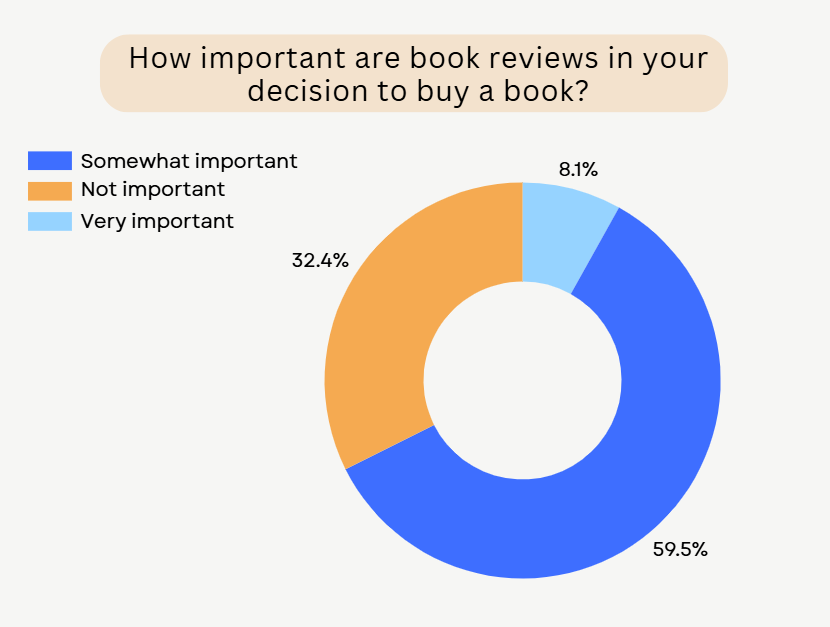
Book reviews have a moderate influence on purchasing decisions. Although book reviews are generally considered influential, they are not the major deciding factor
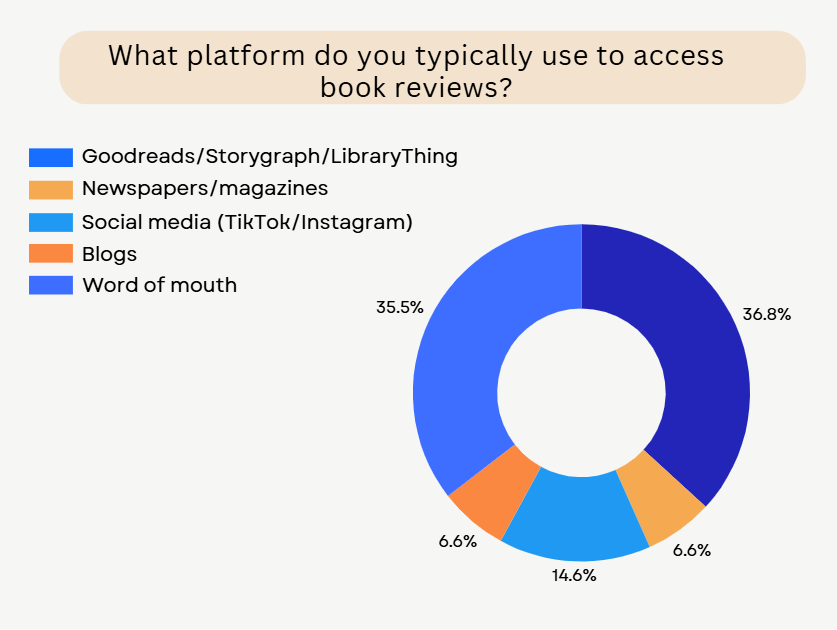
Community-based digital platforms play an important role in how readers engage with book reviews, particularly through Goodreads and social media platforms such as TikTok and Instagram
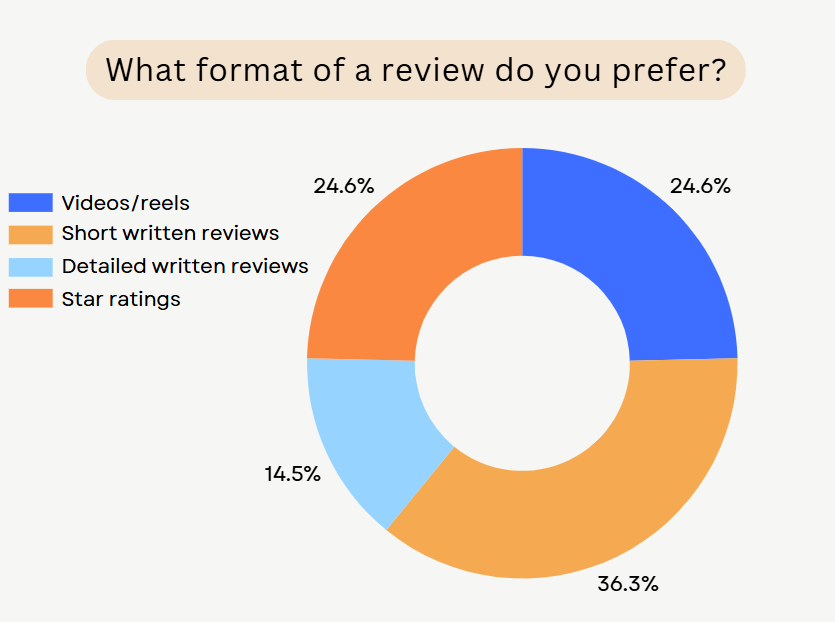
Reader preferences favour quick, accessible and varied review formats, with short written reviews remaining the most popular format, followed by videos/reels and star ratings
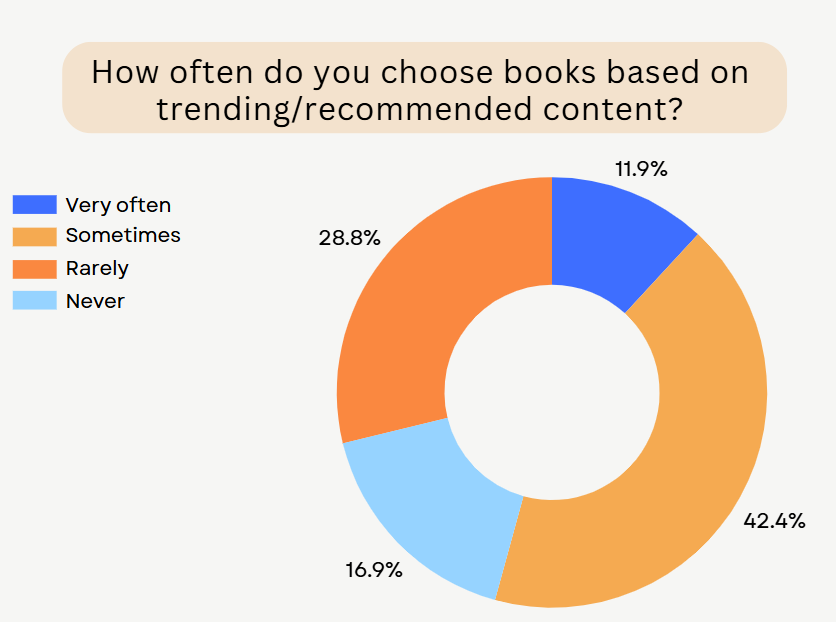
When it comes to choosing books based on trending or recommended content, readers show mixed levels of reliance, with most using such content only occasionally or rarely.
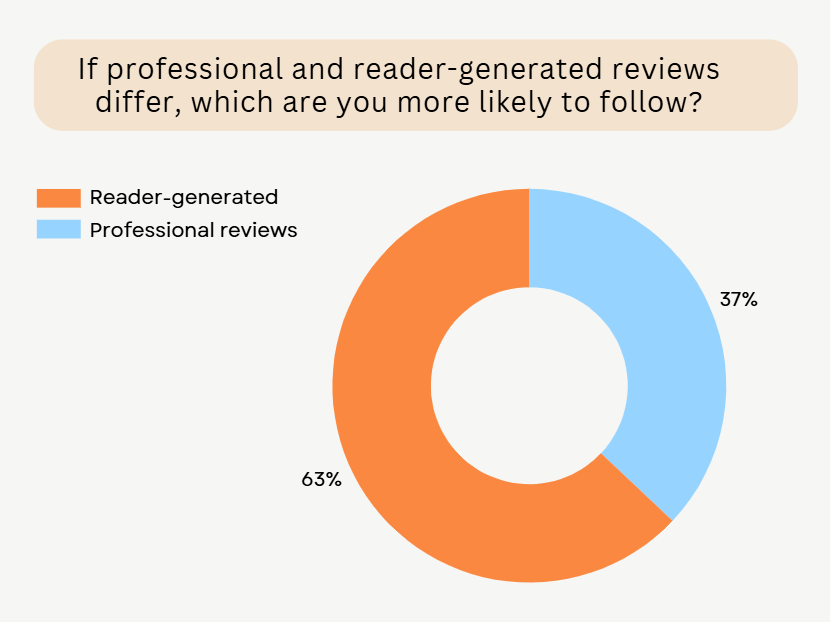
Reader-generated reviews are strongly preferred over professional reviews, while recommendations from friends and family remain the most trusted source
Many respondents expressed different preferences for contemporary book reviews:
‘I prefer reader reviews because they feel more relatable and honest, giving a better sense of how the book actually reads for everyday people.’
‘Nowadays, with so many people churning out videos and reviews on BookTok etc it is all starting to feel a little homogenous.’
‘I prefer book reviews that fit the vibe of the book, if it’s a lite, easy to read book then I like a BookTok review, but if it is a little deeper into the plot and themes… I am more inclined to actually believe what the reviewer is saying.’
Implications for the Australian publishing industry
Although most of the evidence above are globally connected rather than specifically related to Australia, it can be said that book reviewing practices have changed within the Australian publishing industry with the rise of reader-generated reviewing platforms. Reviews are no longer based on a single authoritative voice, instead, they have largely adopted a participatory nature. With the continued growth of contents and influencers, algorithm-based systems may play a greater role in sorting, ranking and recommending reviews, particularly when influenced by paid promotions. While this could improve the efficiency of managing large amounts of content, it may also create challenges for smaller independent publishers competing for visibility.
Publishers and retailers can also use data from these platforms to identify reader preferences, track engagement and predict potential sales, making reader-generated activity increasingly valuable to the industry. However, as digital reviewing becomes more commercialised and influenced by algorithms, promotions and online trends, it may cause distrust in the authenticity of reviews. This could potentially lead some readers back towards traditional long-form reviews, which may be viewed as more trustworthy because of their established critical authority.