
THE ART OF MINDFUL COOKING
Sean T. Barnes
WORDS BY MORGAN BEGG
Amidst the chaos of everyday life, it would no doubt serve each of us well to stop and smell the spices every now and then. We all have to eat, so why not use those moments as opportunities for a much needed pause?
Breathe in. Chop. Breathe out. Chop.
Breathe in. Chop. Breathe out. Chop.
Breathe in. Rinse. Breathe out. Shake.
Breathe in. Season. Breathe out. Bake.
Be present and be aware.
The concept of mindfulness is thousands of years old. Originating from ancient eastern philosophy, mindfulness is the first of Buddhism’s Seven Factors of Awakening (followed by investigation, effort, joy, tranquillity, focus and equanimity). Tracing back to the ancient Indian language of Pali, the concept comes from the word sati, and though the full meaning has been widely debated and discussed for centuries, it can be interpreted through phrases such as ‘the awareness of reality’, ‘the present attention to things’ and ‘the active, watchful mind’. Basically, all interpretations boil down to the same idea: that mindfulness is, first and foremost, a meditation in focus and gratitude.
As a concept so rooted in ancient philosophy, it’s easy to see why, particularly in times of uncertainty and instability, the human spirit continuously turns back to mindfulness as a form of meditation and psychological awareness. Since the early 80s, it has become extremely popular in contemporary Western culture, not so much as a spiritual practice, but as more of an exercise in mental health, a tool to combat feelings of stress, anxiety and emotional reactivity.
So what’s all this got to do with making spaghetti bolognese? Well, it goes without saying that the last few years of living at the day-by-day whims of a global pandemic completely threw our capitalist society for a loop. Locked down, with the noise and movement of everyday life stripped away and a sudden wealth of space and time to fill, people began to sink back into the foundations of simple comforts and looked for ways to ground themselves in the present moment (because even trying to predict what would happen a day into the future had become a fruitless act at this point). Suddenly trojan-horsed with this ample amount of personal time at home, the wider community began to connect to food and cooking in a way that they hadn’t before. Through the rise of slow food and project cooking (unsurprisingly, ‘sourdough bread’ was the third most Googled topic in 2020), the art of mindful cooking has become a cultural commonality.
The beauty of mindful cooking is that it could not be easier. For those who have yet to dabble in this meditative art, there are a few key things to remember that will help you reap the benefits.
Keep it simple. Mindful cooking is about drawing a connection between the self and the natural world, so it would be a much more visceral and enriching experience to use real, natural ingredients, and make a dish from scratch, like a soup or a curry. But we’re busy people with busy lives. We’ve all stood at the fridge in our stinky work clothes and eaten thirty to forty olives straight from the jar because we’re too brain dead and hungry to even contemplate the concept of cooking. So, for the time poor among us, it’s better to start small so you don’t get overwhelmed. Start with buttered toast. Cut up a piece of fruit. It doesn’t matter. It’s not about preparing fancy or complicated meals. You don’t need to debone a duck or temper your own chocolate. You don’t even need to cook if you don’t want to, because, at the end of the day, all the work is done in your mind.
Clear away any external distractions. We’ve all been deep in the cavernous ravine of a reality TV binge and looked down to find that we’ve unconsciously hooned an entire party-sized bag of red Doritos, with only the cheese dust on our fingers to indicate that, yes, you had just consumed food. No doubt it’s mentally and emotionally comforting to enjoy food in a mindless way, to switch off and disconnect from reality—we love to eat a burrito in bed on a Sunday morning while scrolling the feed—but mindful cooking is not the place for that version of you, it is a meditative time to appreciate the direct connection between the self and the action. So, turn off the TV, put your phone in another room, and pull your entire focus towards the task at hand.
Take stock before you make stock. Take the time to set out your tools and ingredients (and don’t give in to the temptation to take a photo of your aesthetic flat lay). Remind yourself what it is you’re doing. Are you making something for yourself? Are you hungry or bored? Are you cooking for others? What’s the occasion? Appreciate the ingredients and where you got them from. If you’ve purchased a particularly phallic-looking vegetable, have a laugh about it. This is about assessing the reality of your present situation and grounding yourself in positivity and gratitude at every step along the way.
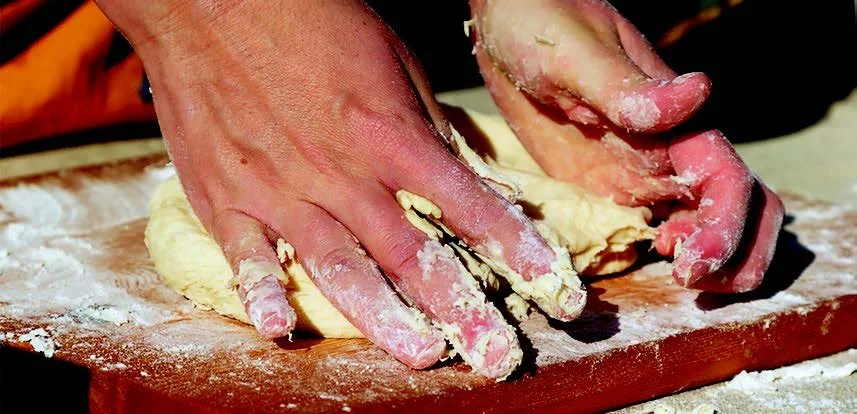
Sight, smell, sound, taste, touch. Once you begin, focus on being fully aware of every movement you make and, in turn, how your senses react to the moment at hand. So, okay, you’re having two-minute noodles for dinner again—fair enough, capitalism is relentless. But hold the packet up to your ear and listen to the scrunch of the plastic as you tear it open. Watch how the noodles slowly rehydrate as you pour the boiling water over them. How does the steam feel on your skin as you wait for it to cook? How does the aroma change each time you add one of those miscellaneous little flavour sachets? Listen to the crack of the egg and take note of the vibrant colour of the yolk (although, coming from personal experience, thinking about eggs for too long will make you feel more uncomfortable than zen, so don’t linger too long on the egg).
Life is speeding up again. We have appointments to make, classes to take, and social events to RSVP yes to before cancelling last minute. This is why mindful cooking is such an easy and rewarding meditation practice ... you don’t necessarily need to give up extra time to do it. We have to eat food or we will literally die! So instead of working against it and seeing it as a chore, work with it and turn cooking and food preparation into a daily habit that nourishes both your stomach and your mind.
