Words by Abigail Tapp
Photo courtesy Printgraphics Printgreen

Printgraphics—a Melbourne-based printing company—has recently celebrated forty years in business. There have been many changes to the business over the last forty years, but what has become apparent is the development of a genuine and determined focus to be ‘more aware of [their] responsibilities towards the environment, seeing [themselves] not only as a printer but a leader in environmental awareness and educator in environmental practices’.
You might think that printing is an industry which is largely destructive to the environment—and in some instances it can be—but for Printgraphics their environmentally friendly printing practices drive their services and their low environmental impact might surprise you.
I think we all need to have a mission to work out a second life for what we use—how can this product go on for a good purpose? Landfill should be seen for what it is—lack of imagination.
We had the privilege of interviewing Nigel Quirk, who became one of the directors of Printgraphics in 2016. We asked Nigel about the importance of the environment and sustainability to Printgraphics and whether this has always been part of their vision as a company.
‘Printgraphics was established in 1979, it is a fair reflection that the environmental outcomes of our practice were not at the forefront of our minds,’ Nigel begins. ‘A different time and different generation, the focus was really of most start-ups of the time – do what you do well and survive!’ Nigel tells us.
‘In 2007 we won the PICA (Printing Industry Craftsmanship Awards) National award for Outstanding Environmental Outcomes, and we have substantially improved on this over the last decade. We now call ourselves “Print-graphics Printgreen” and we love providing clients expert print solutions and service with an environmentally inspired conscience.’
Printgraphics describes itself as a ‘green printer’, something we were curious to know more about. We asked Nigel about what it means to be a ‘green printer’, what the process entails and how Printgraphics maintains this status.
‘In short it means Printgraphics Printgreen is one of only a handful of truly ‘green’ printers. Others pay lip-service, but we are committed to our environmental responsibilities, and are regularly audited to ensure compliance,’ Nigel explains. ‘We are committed to environmental responsibility and are internationally accredited with ISO 14001—Certified Environmental Management. So when working with Printgraphics, you know you are buying from a printer that has the highest environmental policies and certifications in place.’

We were keen to find out how the company continues to evolve in its approach to environmentalism and adapts its sustainable printing practices, particularly as technology continues to develop. We asked Nigel if he could tell us what major changes had been implemented. Only too happy to explain, Nigel told us how Printgraphics keeps itself from becoming complacent and falling into a rut.
‘Printgraphics has reduced its VOC (Volatile Organic Compounds) emission from chemicals by over 30% and has dramatically reduced VOC emission from inks by using organic inks. Basically, this means we are using vegetable-based inks,’ he says.
‘We have reviewed and reduced the chemicals we use and store, and have developed a manifest for on-site chemicals. We have fitted capacitors to our electricity supply which filter out unused waveband in the supply and store it for peak power draw, thereby reducing our drag on the grid. We are also in stage two of this process which is fitting solar panels to our substantially sized roof,’ he continues.
‘Our Computer-to-Plate prepress system uses considerably less chemicals than older methods and platemaking systems. The small amount of chemical used in our system is not harmful to the environment.’ Nigel adds that their ‘Water consumption has been reduced from 11 litres per plate to 200 millilitres per plate—making an annual saving of 200,000 litres. We harvest all the rain water from our roof and we carbon offset our entire fleet with Greenfleet.’
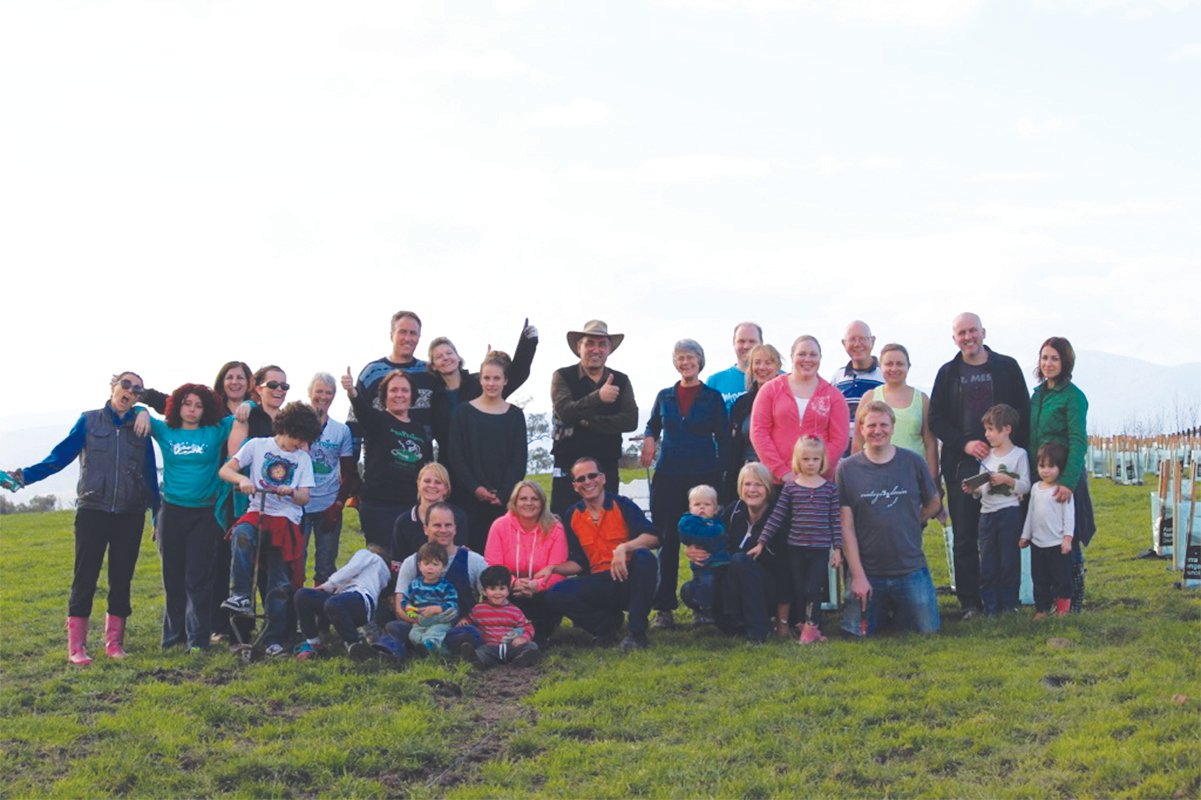
Impressed by the extent of Printgraphics environmental awareness and the actions they take to maintain their low environmental impact during the printing process, we were amazed to hear about their external sustainable practices. ‘One simple example would be [that] Printgraphics Printgreen and our clients hold regular tree planting days to create bio-diversity corridors for animals between established national parks,’ Nigel says.
The company has also amazingly managed to reduce their waste from an industrial-sized bin to a domestic-sized wheelie bin—an enormous achievement for any business, but especially for one within the print industry. We were fascinated to know how they managed to achieve such a drastic reduction in waste.
‘Probably worth noting this did not happen overnight, this was a six-month journey where we had to individually source purposes for our waste. One notable example was chatting to a company that produces kids’ play equipment and realising our disused rubber blankets were perfect for kid-safe mats. I think we all need to have a mission to work out a second life for what we use—how can this product go on for a good purpose? Landfill should be seen for what it is—lack of imagination.’
The environmental awareness of Printgraphics is an encouraging sign that there are companies and people fighting to save and preserve our planet. But what is abundantly clear to us after speaking with Nigel is that many companies have the capacity to actively reduce their waste, recycle and re-use items—they just need to have the initiative and motivation to make it part of their company mission.