A BRIEF HISTORY OF THE BÁNH MÌ
WORDS BY SARAH GORY
Growing up in Melbourne with its vibrant Vietnamese community, I’ve eaten my fair share of bánh mì. A crusty baguette stuffed with meat, herbs and chilli—this Vietnamese street food now spread across the world has its roots in French colonialism with a local twist.
We arrive in Hôi An on Vietnam’s eastern coast and it’s impossibly early in the morning. Carrying a sleeping child through streets slick with rainwater, we join the crowds of school children in their crisp white uniforms on red plastic stools spread across the footpath. Our first meal in Vietnam: the classic bánh mì.
A striped awning juts out from the top of the trolley as a woman in a matching floral pink áo bà ba prepares our meal. Humidity notwithstanding, she has everything she needs spread out before her. Slivers of chilli, mounds of coriander, sizzling pork, pickled vegetables, and in a large sack to the side, golden baguettes the size of my forearm. She works quickly, expertly, and before long we’ve got chilli-laced sauce merrily dripping down our fingers.
The bánh mì is, perhaps, the ultimate symbol of colonialism and cultural adaptability. When the French first invaded Vietnam in the mid-1800s they brought with them their love of bread. It wasn’t until the upheavals of the First World War that the iconic French baguette became affordable for the broader population. At first, the Vietnamese ate it with butter, cheese and cold cuts, emulating their French oppressors. After the Second World War, as refugees from the communist north fled south in droves, the bánh mì emerged on the streets of Saigon.
‘The bánh mì is, perhaps, the ultimate symbol of colonialism and cultural adaptability.’
The considerably more affordable vegetables and pork replaced the French cheese and cold cuts, democratising this humble sandwich for everyone to enjoy. And so the bánh mì as we know it today was born.
Soon after, those same refugees began fleeing in boats across oceans during the protracted and bloody Vietnam War, bringing with them to new countries⎯including Australia⎯their culture, traditions and food. By the 1980s Vietnamese bakeries were dotting Cabramatta in Sydney and Footscray in Melbourne. As the Vietnamese communities grew and moved around the suburbs and cities of Australia, so did the bánh mì.
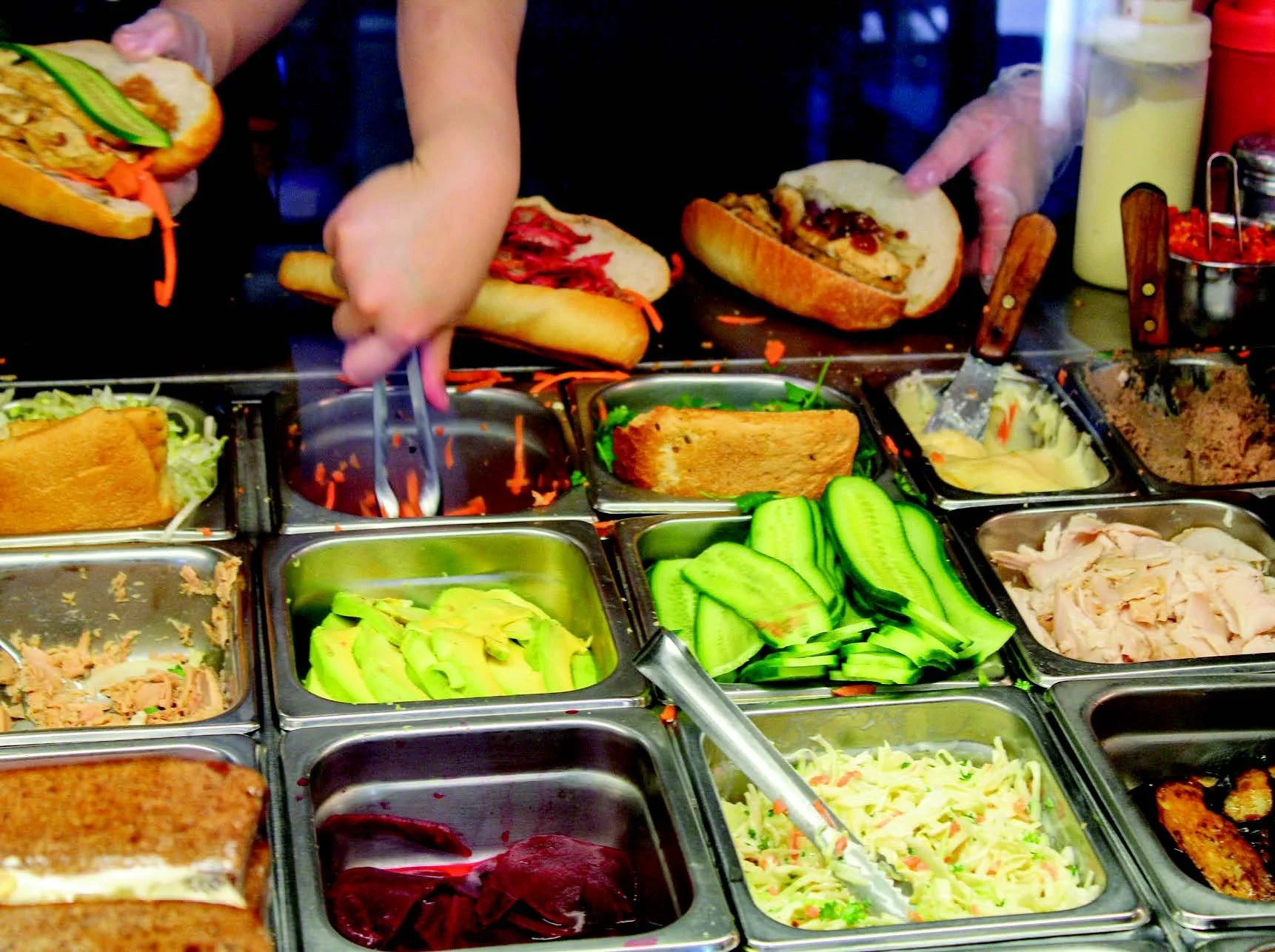
Today you’d be hard pressed to find an Australian city without its fair share of Vietnamese bakeries. Metal trays piled high with cucumber ribbons, aromatic herbs, glistening meats and jellied tubs of mayonnaise. Equally as appealing to broke students as to busy office workers, over the years the Melbourne bánh mì has adapted itself to local trends and tastes and now comes in a variety of untraditional flavours: poached chicken, lemongrass tofu, without (gasp) chilli.
Anthony Bourdain once described a bánh mì that he ate from Madam Phuong’s in Hôi An as a ‘symphony in a sandwich’. Hyperbolic perhaps, but no less true. And with that I’ll leave you to brave the line at my popular local for a crusty, tongue-numbingly-spicy bánh mì.