
EGGS
Sean T. Barnes
WORDS BY JULIETTE SALOM
Juliette Salom explores the delicate nature of moving out of home for the first time and the daunting task of learning who you are in a new one. Her tableau-esque short fiction piece beautifully captures both the quiet loneliness and insurmountable joy of living in a sharehouse.
Fried
I never ate as many eggs in my life as I did in the first month I moved out of home. These eggs were fried, sunny on top, runny with a flop. These eggs were cooked by the hand that fed me, and the hands of the two misfit friends I was trying to make a new home with. Every breakfast was a fried egg eaten with others. A runny egg before work, a sunny egg before lunch, an egg always eaten together.
We lived on a main road right near the train line—a house of paper and windows that didn’t close properly, where the boundary between our home and the outside world was thinner than I’d have liked. But on that first Sunday morning, the world, and the house, was quiet. I let myself get lost in the streets of the neighbourhood I was still getting to know. Walking the streets alone, reading the names of the roads aloud, I was learning my new home.
The eggs were bought from an empty supermarket and I wandered back to the house. The other two had arisen. Their laughter tumbled through one of the forever-open windows, and without the trucks and the traffic and the train screaming through, I could hear them from all the way down the street. That’s what that first month will always sound like, laughter from an open window, the whole world quiet but us.
Scrambled
University began again and our routines were pulled out from under us, and after four weeks of co-existing with my favourite people in the world, it was like I was living alone. I was in when they were out, they were in when I was working; I was a ship that shared their sea but only ever felt their lights glistening on the horizon.
With a kitchen to myself and no-one to ask for a plate, I whisked and mixed and peppered and salted, exactly to my liking. And then I’d sit at the table in the living room, politely eating my scrambled eggs in silence, with no-one to jest with how overcooked I liked them.
But the dining table suddenly felt enormous, and the eggs were never the same. They were too runny but also too rubbery, too bland yet over-salted; they were the kind of eggs I’d only want to eat with the company of others to numb the taste.
Scrambled eggs were lonely eggs, and lonely eggs were not yummy. I opted for toast after that; when the kitchen was mine and the house was quiet. The crunch of burnt toast would at least fill the gaps in the silence, make the table seem loud enough for one.
Sean T. Barnes
Raw
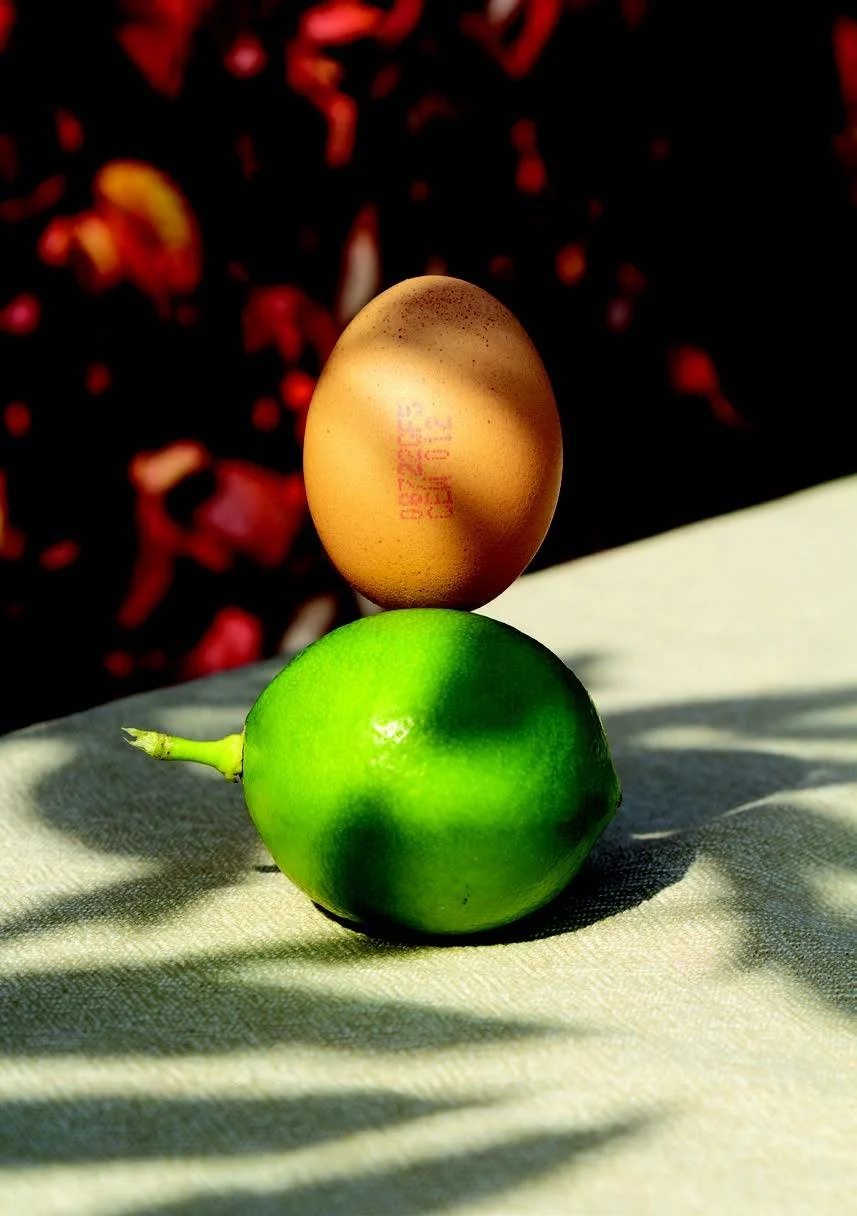
Raw eggs were broken eggs, and broken eggs happened when there was too much on our plates. Something had to go, and so the most logical option was breakfasts. Breakfast-less and egg-less, our home was becoming cold. Winter had arrived but still not yet a heater that was promised many months ago by the landlord. Broken shells spotted the sticky kitchen floor and the house held the cold so well I could see the hot air rise out of the gaps in the cracked shells when they’d fall.
In the early hours of the morning after long shifts and rude customers, the house I’d tiptoe into was always at its most cold and most quiet. The urge to run to the kitchen and throw open the refrigerator door, throw a few eggs against the wall, drop them purposefully on the floor, just to see some heat, some colour, to hear some noise—that urge was always there.
Omelette
Winter was nearing its end. One more season to survive in our old house before we would move on somewhere else. But, as it tends to do, spring made our ugly home feel beautiful. The sun spilled through the cracks in the windows and the thinness of the walls allowed our home to feel warmth again.
Only in spring did I realise how fast a year can be. That it was the start of summer only nine months ago was absurd. That I no longer lived with my parents, no longer slept in the same bedroom I had for most of my life, no longer knew the streets of my neighbourhood like I’ll ever know them again; that I had moved on and moved out and thought I’d feel somehow different, all of this was incomprehensible.
And suddenly the idea of moving back became tantalising. To be looked after and accounted for, to have bills paid and groceries bought without me ever considering the cost, it just seemed so easy.
In late spring, with only a few weeks left to go on the lease and still no house secured to move on to after the year was up, I woke one morning earlier than usual. We were on the precipice of summer, of holidays and beach days, and it started to smell the same. The musty smell we assumed was from the house standing unused for too long when we first moved in, the smell we’d assumed had faded away, had come back. The house begun to smell the same as it did a year ago, as it did when we were a little younger, blissfully naive and much more optimistic.
And when I woke this one morning, early enough to catch the pink in the sky, I realised it was Sunday. And Sundays, I remembered, smelt like eggs.
And so, with the other two still asleep, I began. I cracked eggs into bowls, I struck a match to the stove, I put heat to the flame and veggies to the pan. I made an omelette. I made three—one for each of us. And by the time they’d get up we’d all be sitting around a table big enough for at least three, our soft giggles would fill the cracks in the windows, and when they wouldn’t, the sun would spill through instead.
