

Words by Emma Taylor
Images by Daniel El Aawar
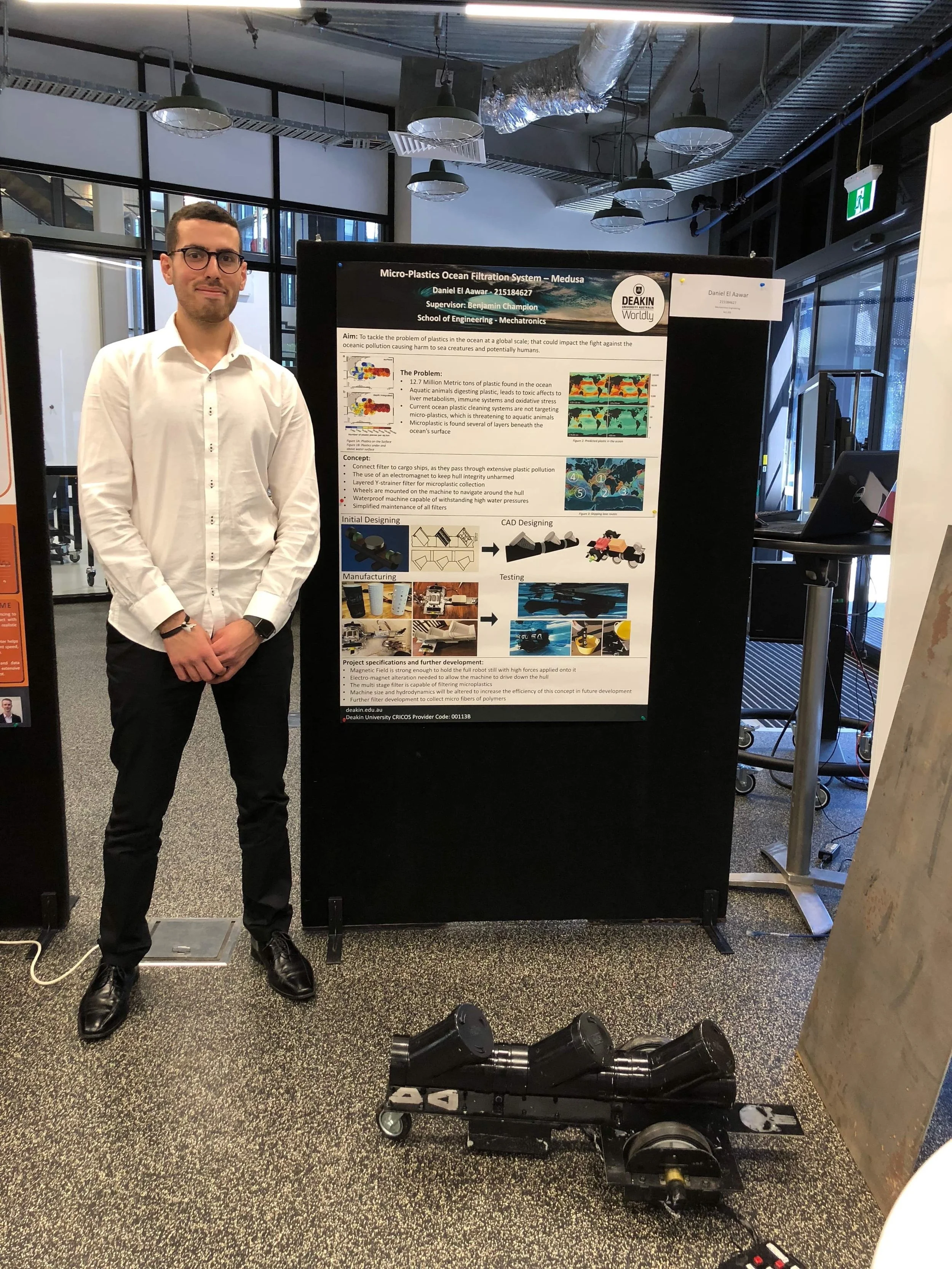
Engineering is a profession of innovation and entrepreneurship—engineers are constantly working to produce and create products which will be of use to the community and for future development. When we look more closely at the role of an engineer, there emerges a responsibility and an obligation for the engineering industry to work in an environmentally conscious or sustainable manner.
Daniel El Aawar is an engineering graduate from Deakin University, Geelong, whose honours project had a strong focus on environmentalism and sustainability. I was fortunate to be able to speak with him about his honours project and how this innovative product could positively impact our future in combating a contemporary environmental issue.
When I ask Daniel about his purpose and mission in engineering, he responds, ‘Going into engineering, I was always hopeful that I would have the opportunity to make a positive change in the lives of people around the world.’ He continues, ‘Throughout university we were taught that sustainability is a major aspect of our role as an engineer. Designing systems should be sustainable and leave as few marks behind as possible.’
Design and innovation are two key focuses for Deakin University’s engineering division which works to provide the opportunity
for students to engage in practical programs and create innovative engineering solutions to real-world problems. In choosing his project, Daniel considered his desire to pursue something that would allow him to ‘better the problems that humans have caused in the world.’ It is unsurprising that Daniel went on to choose an honours project that aimed to create a solution to the environmental issue of microplastics in our oceans.
‘My interest in the environment led me to research major issues being faced in the world, and plastics in the ocean was a famous yet hardly discussed topic ... I also remembered a quote that one of my teachers at school had said: “take only memories, leave only footprints” and this inspired me to design a system that had the potential of removing the harm we [humans] have already done to the ocean,’ Daniel explains.
Microplastics are having a massive impact upon the environment and our marine life. As Daniel explains to me, ‘Visible microplastics are typically defined as plastics that are between 5 and 25 millimetres, however, there are smaller microplastics that aren’t as visible, and these range from 20 micrometres to 1 millimetre.’ Daniel chose to focus on microplastics “Because many projects are fighting against the macroplastics in the ocean and microplastics are being left behind. It is important to remove these [microplastics] from our oceans as they are being consumed by small and large fish ... and the plastic in their digestive systems can increase the possibility of cancer, birth defects, immune-system issues and many more diseases. The toxicity of these plastics in a fish’s digestive system has the potential to affect humans when they consume these fish.’
To combat this real-world environmental issue and reduce the amount of microplastics in our oceans, Daniel designed a prototype for a machine that could filter plastic from the water while attached to the hull of a ship. ‘The filter is made of several y-strainer filters that can separate plastics depending on their size,’ he says.
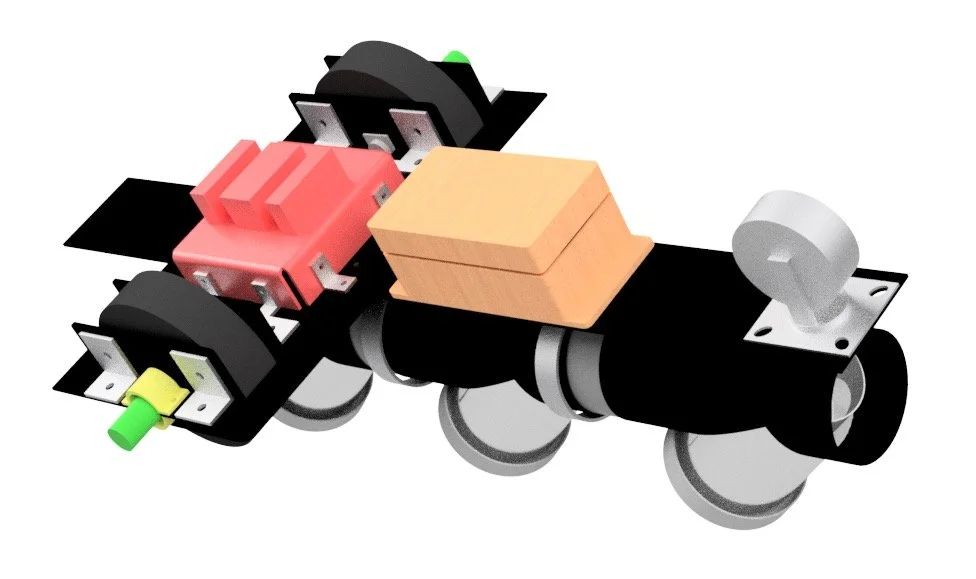
‘The robot side of the product was challenging and still has a bit of work to be done, however it was able to demonstrate some advantages in comparison to current models. The robot has an electromagnet that can be turned on and off for when it is required to be connected to the ship. When the electromagnet is on, the strength of the magnet can be altered in order to use the mounted wheels for manoeuvrability around the ship’s hull. This was designed this way in order to deploy the robot to any side of the ship depending on its needs.’
While Daniel’s project is only a prototype at this stage, a filter such as this could have a major impact if created and implemented for real-world use. ‘The impact ... might not be significant with one filter being deployed,’ Daniel suggests, ‘but the idea that thousands of ships roam the ocean every day and there is potential to have one or two filters on each ship could mean that we are constantly removing a large quantity of microplastics from the ocean over the years.’ He continues, ‘The device is designed so that its operation is simple, and the plastic can be easily removed once collected. This could inspire many people to use the system.’ He suggests that such a product is likely to be ‘a long-term solution that will take a while to develop [and achieve] the desired outcome of a cleaner ocean.’
Daniel strongly believes that this device—as a potential solution to the microplastics issue—should be tested to understand the efficiency of such a product at an actual model size. He emphasises the urgency of the issue as something that ‘needs to be addressed as soon as possible.’ As he explains further, ‘I believe the world should attempt to pursue any possible solution to decreasing the plastics and microplastics found in the ocean as these are causing a lot of harm to the marine life.’
Daniel’s honours project has certainly kickstarted his passion for creating products which will improve sustainability and demonstrates his keen interest ‘in making the world a safer and better place’ through his engineering career.
