

Jessie Scott fell in love the domestic architecture of inner Melbourne and wanted to explore the changing suburban landscape. Enter: The Coburg Plan.
Words by Shannyn Oberegger
Photos by Rowan Heuvel
Why did you move to Coburg?
My partner and I had suddenly found ourselves in a position to buy a house and having looked around Brunswick and the inner west, Coburg was really good value. It was really well-serviced with shops, transport, medical clinics, schools and parks – all the deeply pro saic things you think of when you are buying a house. And more personally, it reminded me a lot of Moonee Ponds in the ’80s, where I grew up. It had similar housing stock, a similar ethnic mix—it’s a classic north-west suburb in that it’s a mix of the historically working class and the aspirational middle class (whatever those terms mean now).
What inspired the interest in your surroundings?
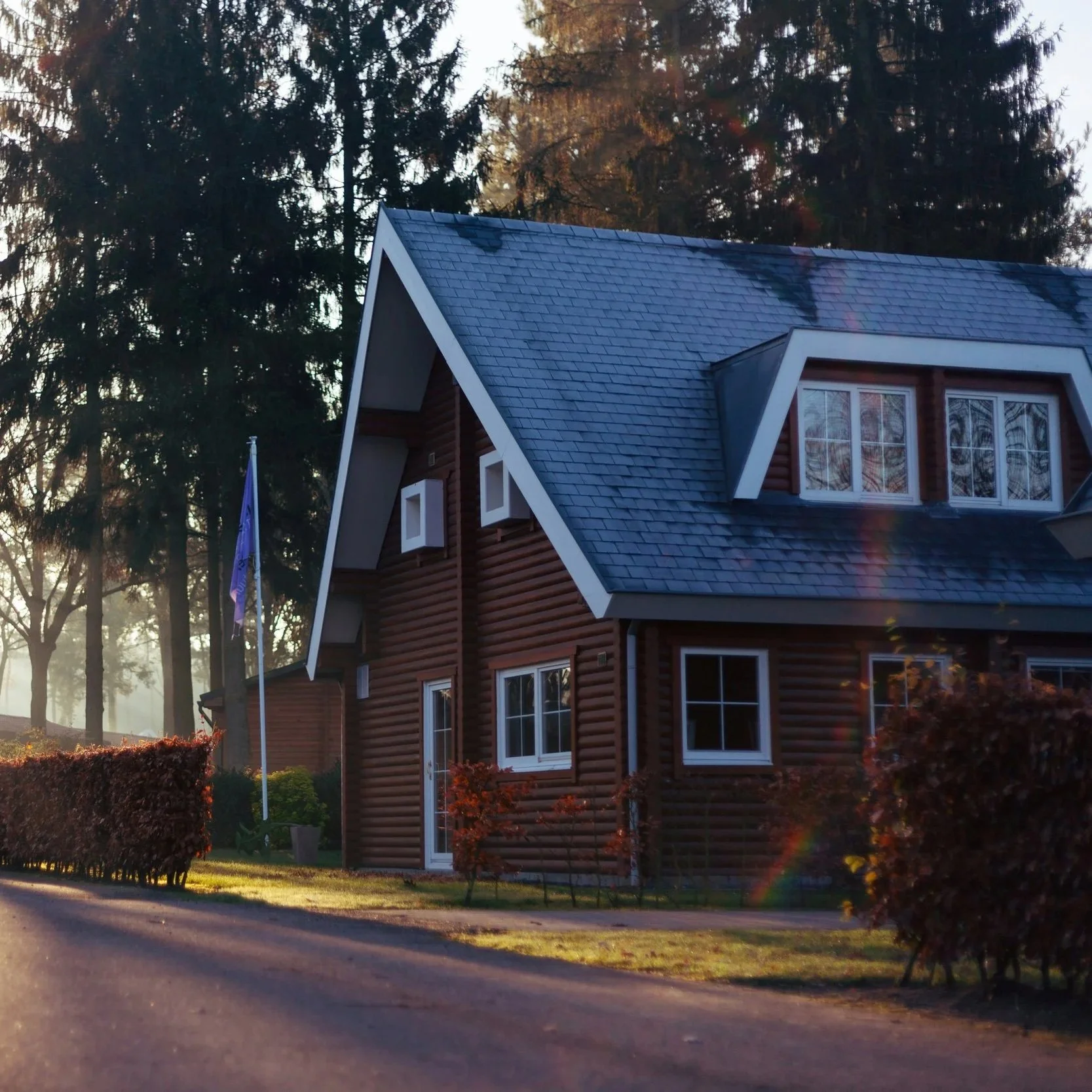
A couple of years after I moved to Coburg we got a dog. I ended up walking the dog twice a day, getting up early in the morning and wandering around the neighbourhood finding the good parks and different routes to take. Along the way I started noticing the variety of the houses in the area in a way I hadn’t really before—I grew up around ethnic villas and weatherboard bungalows, taking them mostly for granted. Looking at them again as an adult, having lived in the inner city in my early 20s, I saw something different in them. I saw how people could make their house their own work of art, or how people kept a modest home fastidiously neat, or how they let it rot into the ground over the years. It made me think about architecture and how we’re usually totally at the mercy of it—what architects decide will be the look of the day, and how your home is the only piece of architecture you can determine and make changes to suit yourself. So, I started taking photographs and the more you photograph something the more you notice and become obsessed, it seems. It was also a really great way to keep my art practice going after having a baby.
How did the @the_coburg_plan Instagram start?
The first Coburg Plan project was an exhibition at Tinning Street in 2013. And my first set of photographs was actually taken on 35mm film with an old analogue SLR camera. I also made a video from those images; the Instagram account came a couple of years later. I’d been taking some draft photos on my phone when I didn’t have my SLR with me—I’d snap an image and post it on my personal Instagram account as a way of keeping track of houses I wanted to go back and take a ‘proper’ photo of. People seemed to really like these images and seemed to want to follow them, but because I didn’t want to open my personal account up to strangers, I decided to separate the accounts and make a Coburg Plan Instagram where I could just post that stuff and anyone could follow it and they didn’t have to look at pictures of my baby ad infinitum! It was a very slow growth to begin with and I’ve never really tried very hard to get heaps of followers—it’s a very modest following, really. But over time it expanded beyond my circle of friends and family to friends of friends and beyond.
'I started using hashtags I’d seen on other photos of vernacular architecture and started following other people who were photographing and sharing similar subject matter—all over Australia and even in other countries. It’s been an extremely valuable way to build an audience for my work—and a more diverse audience too, as the subject matter intersects with so many different fields: architecture, design, photography, contemporary art, heritage, community organising, gardening, real estate, urban planning. And loads of local residents follow the account who are interested in their community and what is happening to it over time.’
When did the Coburg Plan start to become a book?
In the last year I have started to feel that the Coburg project is starting to wind down—not that it is ending, but I have another big project on the horizon and it will probably take a back seat for a while. I’d seen a few artists and photographers I follow on Instagram releasing books and I thought it would be a great way to cap off the project for now – create a more lasting record and overview of the five or six years of my practice. I also felt it would be a great thing to offer to people who have supported and followed the work over that time. It feels like so many people have input into the work by commenting on the Instagram account—adding their knowledge and insights and memories into the pool of ideas surrounding the work, and making a book seemed like a good way to contain all that. And I’ve never made a book before, so it felt like an interesting challenge—I love photography books and wanted to have a go at one myself.
How did you find the process of making the book from the Instagram account?
It was completely joyful actually! It was nice to not be making work for a project—to be able to sit back and look at work from a distance and try to create a meta-narrative out of it was really enjoyable, and something I’ve never had the chance to do before. Usually a show is over, and you box it up and don’t get a chance to think about it again. Also, when I moved the project to Instagram, I decided I was only going to post images from my DSLR—no phone pics anymore. So there was a lot of editing images in Photoshop and digging up the right files, but it wasn’t as stressful as having to make new work. I also loved commissioning the writers for the book—that was so exciting to have other people’s voices brought into the work.
How did you find writers for the book?
I knew all the writers except Timmah Ball, who I have been a fan of for a while. It was a matter of thinking about who I knew who had an opinion about this stuff. All of the writers had written about the suburbs, or architecture, or photography, or gentrification in some way before. But they all came from totally different approaches and disciplines and had different ways of expressing these ideas—the book has a short story in it, a poem, a more traditional art-historical essay, ficto-criticism and other things in between. I also interviewed Ugly Melbourne Houses and included some of the captions and discussions from the Instagram account in the book—I wanted to acknowledge how important that online community has been to the work, and it means that the book has a very rich mix of content and modes of expression in it, which I like. You get a lot of bang for your buck with this book!
What has changed in Coburg?
I like that Coburg is a booming community—that there are a lot of families and young people in the area, it feels like it has a bit of a new lease on life. And that means that facilities and infrastructure is being upgraded—there’s a new high school that the community fought for and there’s a sense of it being a really living, breathing, changing place. I don’t like the way the out of control housing bubble we’ve just lived through has affected the built environment.
Because of the over-inflated cost of land, there is no incentive any more for people to renovate old housing stock – so we just lose it. It gets bulldozed and developers build horrible and badly made townhouses that will not last the way the old houses have. I’m generally pro-densification, and I’m not anti-development, but I think there’s been a wild west attitude to these things in our community over the last 10 years—just a smash-and-grab mentality that means we, and future residents, are being short changed.
We have a strange attitude in Australia—we think design and architecture are only for the top end of town and the big, public buildings. We love to invest money in wild out-there architecture in the CBD, but when it comes to the buildings we actually live in every day of our lives—the buildings that are probably the most important and consequential to us—we view good design and architecture as some kind of pretentious luxury. It really needn’t be. If you invest a bit more at the point of construction in making houses that offer good quality of life through good design, you won’t have to bulldoze them in 20 years as they will still be standing, and people will still want to live in them!
Another thing that has changed is that there was still a Kodak shop on Sydney Road in Coburg where you could get film developed and printed. But by the time I’d finished the first couple of shows, it had closed down. I feel like I was working through a changing of the guard while I was making that work.
What do you think about the architecture in Coburg? The new and the old?
I can say that I really love it! I love how a house and how someone has altered it over time can tell you so much about the social history of a place—how a weatherboard house covered in brick cladding can tell you that the people who lived there came from a country where you would never build a house out of something as insubstantial as wood and that even fake bricks were better than weatherboard! I love how people in this area have taken relatively plain housing stock and made their own mark on it over time.