CULTURED CARY:
IN CONVERSATION WITH CARY AIKEN
WORDS BY KITTY WEBSTER
On a lovely warm afternoon in March—right before the COVID-19 isolation lockdown came in—Cary Aiken, at her workplace KINES, took Forkful through a life enriched with fermentation.
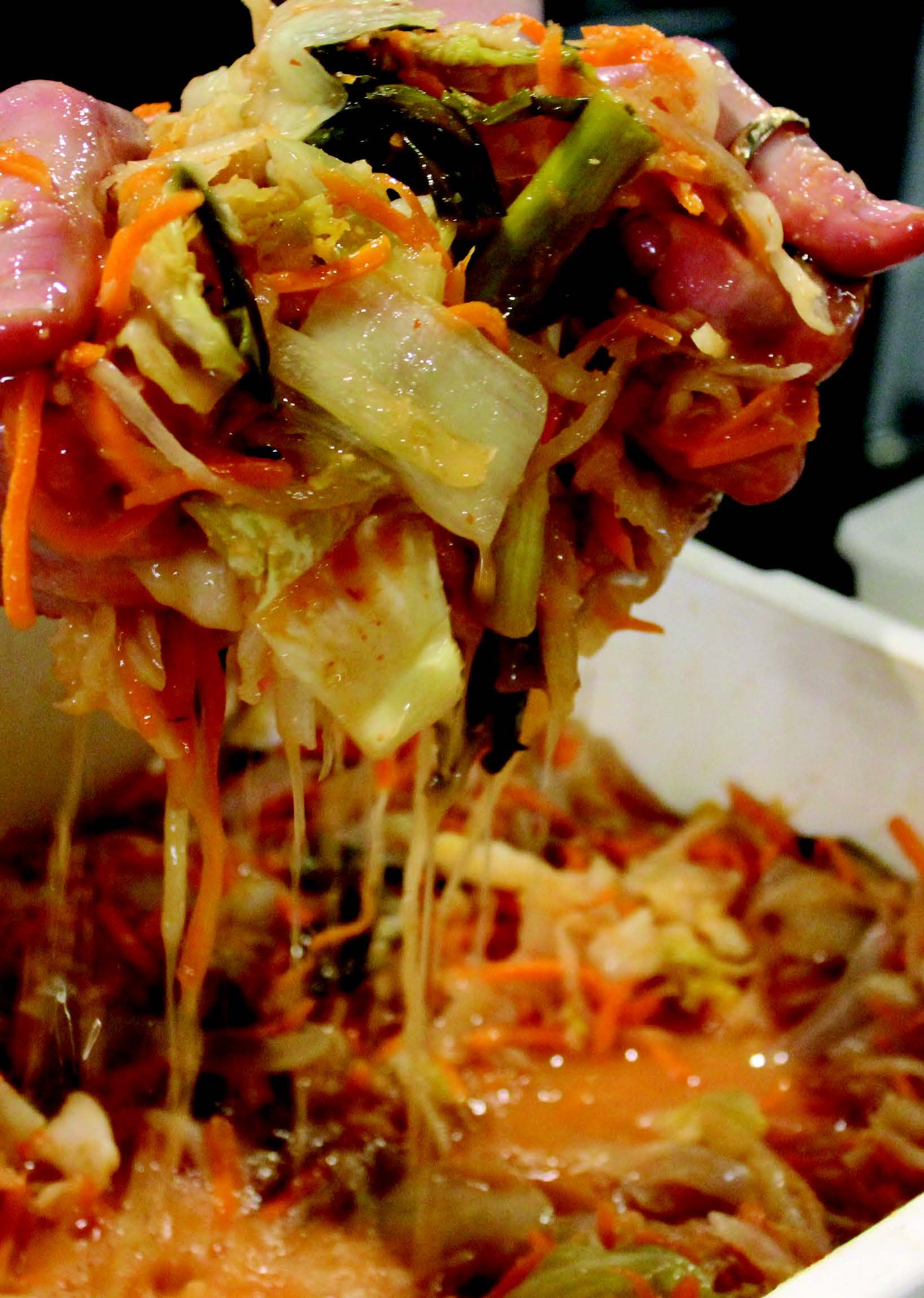
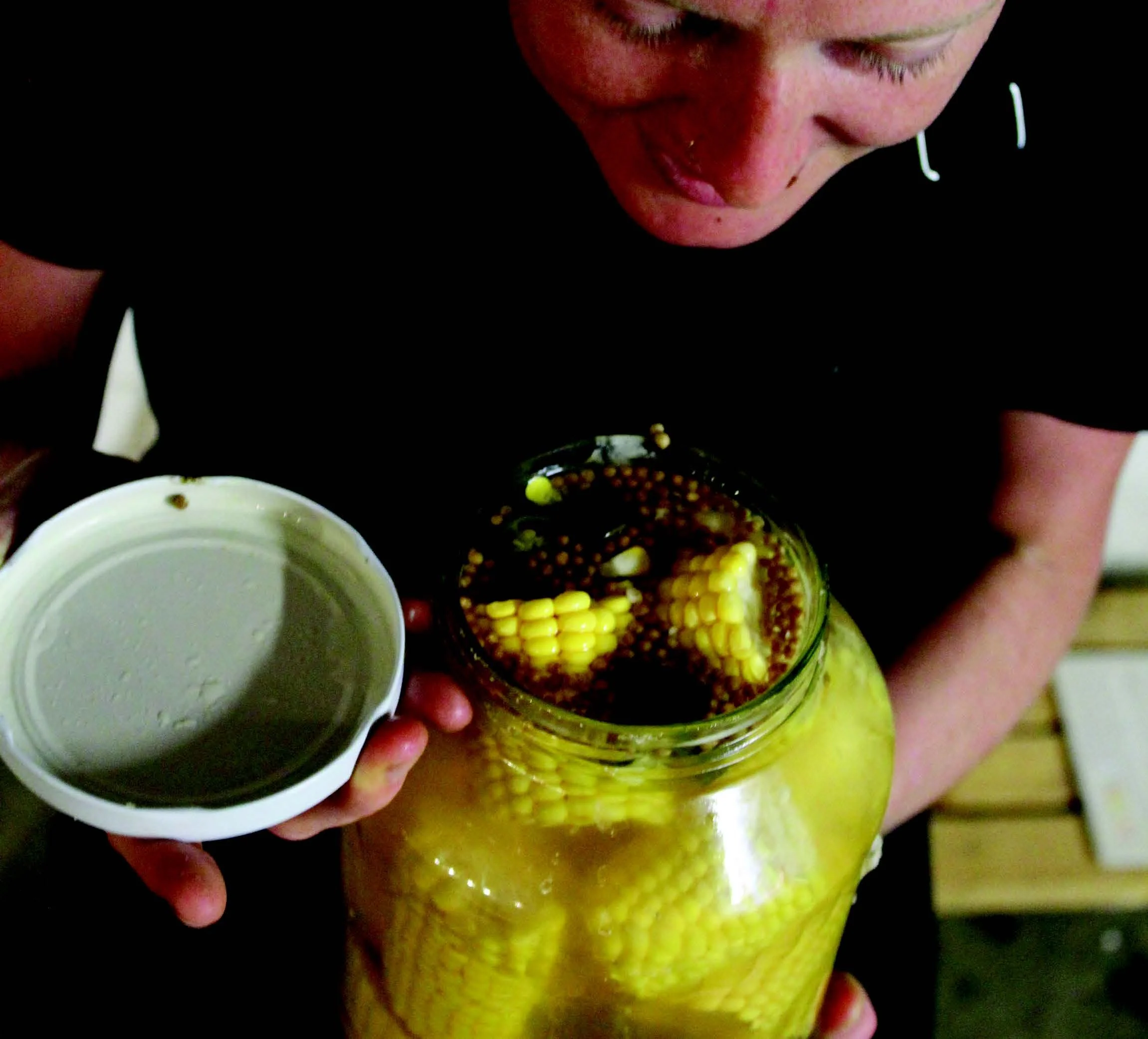
Cary Aiken is a fermenting faerie: at home she runs@inapickleclub, professionally she is a chef and fermenter at KINES Café. There, she is responsible for house-made ferments and has been expanding their ageing wares via sessions with fermentation’s big names like Sandor Katz (the ‘Fermentation Fetishist’ himself) and Sharon Flynn of The Fermentary in Daylesford.
Having always been a maker, Cary is deeply involved with the planet: sustainability, community and food.
Kitty: What is fermentation? How do you do it? Could you take us through the process?
Cary: Fermentation is the process of preserving and enhancing food by utilising and encouraging the growth of the good bacteria, the yeasts and enzymes already present on the fresh fruit or vegetable. By providing the right environment we can encourage these good bacteria to multiply, which then changes the pH or acidity, similar to that of vinegar, preventing any pathogenic bacteria from surviving, and preserving the food from rotting.
When food is fermented it is essentially pre-digested by the microorganisms present, making it more easily digestible for us, with many of the minerals and nutrients more readily accessible during digestion.
Fermented foods, especially those ‘wild fermented’, have an incredibly diverse range of live bacteria, yeasts and enzymes which when eaten regularly contribute to a diverse and healthy gut flora, enabling your body to better digest and process foods, supporting a healthy immune and digestive system.
The process of fermentation is very different from the many other forms of food preservation, which typically use heat or vinegar to kill off this microbial life while preserving. This is a common fermentation misconception! Ferments don’t use vinegar, rather they make their own. Using salt or sugar to create a stable environment and encourage the growth of good bacteria, the bacteria eventually turns the pH to acid, giving you that delicious sour vinegar taste.
The simplest form of fermentation I currently work with is lacto fermentation, which entails submerging fresh vegetables in a salt brine (usually around 3% salt) and leaving it to sit in a sealed jar at room temperature for seven to ten days. During this time, you keep your vegetables anaerobic, which means no air. As fermentation takes place, bubbles and gasses form and rise to the surface: to release these gases, you push down your ferment ensuring full submersion in the brine. Remember to ‘burp’ your jars so the gases don’t build up—they can become explosive!
Alternatively, use an airlock—a little plastic device which goes in the lid that lets gasses out but not in—an added benefit where no wild yeasts can access the ferment, as often happens when just using a lid or a cloth. Wild ferment is indicated through small white yeast particles that can begin to develop on the surface of your ferment—this is totally fine, but it will alter the flavour of your ferment so should be removed regularly. If there is mould growing, remove it and resubmerge your ferment, keeping a close eye on it to make sure no mould grows again.
Kitty: Is fermentation hard? What are the variables and how do they influence the process?
Cary: It’s easy, really easy, but also very random. It’s hard or near impossible to poison yourself, but it can be tricky to get the balance right—no two ferments are ever the same. The live bacteria on each vegetable can be vastly different, but generally leaving the skin on is best, as the skin has had soil contact and contains many healthy microbe communities—all the better to ferment with! Creating the right environment is very important. For example the right salt ratio: too much and the bacteria can’t grow; not enough, and the bad bacteria can stay alive. A general ratio of 2–5% salt allows the good bacteria to breed and dominate the bad, leading to a happy, healthy and delicious live ferment. Temperature is a huge variable—too warm and your ferment happens very quickly, which gives it an intense sour flavour, and too cold and your ferment may take too long to get started and rot. Generally room temperature is fine, below 25°C seems to work best in my experiments. When judging if you’ve got it right or wrong, use your instincts. How does it look? How does it smell? Does it smell like it is decomposing? Some ferments do go through funny smell phases—often before the good bacteria have dominated and soured the pH sufficiently to stop the food breaking down—but this phase will pass, and the ferment will start to smell delicious again.
If it smells so bad your instinct says ‘don’t put that in your mouth’, well, don’t. If it smells good, taste it. Sour enough? Too salty? In the end a ferment is ready when it tastes good to you. The longer you leave it at room temperature the more sour it will taste, so when it tastes good to you, put it in the fridge.
Kitty: What are the differences between homemade and store-bought ferments?
Cary: Store-bought ferments are usually made with a starter culture, which means that a few basic bacteria strains are added to the ferment in the beginning and these will dominate, ensuring a healthy ferment, but also reducing the biodiversity that is present in wild ferments.
Many commercially available fermented products are also shelf-stable, which means they have been pasteurised, or heat-treated—this kills all the good bacteria bred during the fermentation process, allowing the preserved vegetables to last an amazing amount of time but losing all the living benefits. Ferments are so cheap to make at home, and fun too. Why not?!
Kitty: Why ferment? Why is it important? What roles does it play?
Cary: Fermentation is steeped within every culture around the world, with traditionally-fermented foods at the heart of many cuisines. Fermentation is a skill that gets passed through generations, linking groups and embedding culture in its continued use and the sharing of skills and foods. An ancient and modern craft that is still widely shared today, fermentation is a way of bringing people together, of preserving a bountiful harvest and of caring for a community’s immune systems and gut health. Fermented foods are really important because they give our diets a boost of life. The diverse community of microbes and bacteria that happily grow during fermentation make the product much more alive than it is as just the ingredient itself. Once fermented, food contains a wealth of live bacteria that can help you to digest and reinhabit your digestive system, which through our modern diets or through the use of antibiotics may be severely depleted. Through eating a range of fermented foods, you can increase your digestive health significantly, which can also lead to better cognitive and other bodily functions. My favourite thing about fermenting, other than the food itself, is the community that I have accessed and created by sharing skills and fermented goods with others. It has brought a lot of richness to my life, and I love that I can share that with others.
Kitty: How did you get into it?
Cary: I grew up with it. My mother always had a scoby in the corner, and was constantly preserving foods she had grown in the garden. We wasted nothing and made the most of everything. Like most people, I started with kraut: an easy and enjoyable process with delicious rewards. Once I had a few successful basic batches, I experimented with flavours and started sharing what I made with my friends and family. I really started getting into it when I moved up to the Northern Rivers region, on a sabbatical from Melbourne’s hustle. I lived in a tiny rainforest town, and came to make great friends with a group of older women who happened to be in a monthly pickle club.
Each Sunday we would get together in the community hall kitchen and make three or four pickles and preserves together, then enjoy sharing our bounty and company.
It was very special, sharing time and space with these inspiring humans, and enjoying each other’s company, while also making preserves. Taking fermentation and preserving from a solo kitchen endeavour to a social sharing one really inspired me, it’s such a wonderful way to share time, space and knowledge with people.
On my return to Melbourne, I cooked up a scheme to start a pickle club here, to get my friends to preserve together. I lived in a share-house with an avid bin diver, giving us unlimited free food to experiment with. We would dive and then invite friends over to cook or preserve with us. That’s how @inapickleclub was born; taking the waste of our food culture and preserving it, and redistributing it among our communities, trading and sharing. I’m currently working as a chef at a café in Brunswick, KINES, where we make delicious, seasonal food from scratch, including pickled and fermented food—doing our best to preserve the flavours and produce from each season. It’s an endlessly rewarding experience. More recently, I’ve been doing lots of research and workshops. Finding out about the amazing diversity of fermented foods is very inspiring, as is the knowledge on how they can enhance digestion, health and gut flora, helping many to overcome or better manage food allergies and intolerances. Although I still love all the ways of preserving and pickling food, the wild ferments are what I’m spending more and more time experimenting with.
Kitty: Given that Forkful is a Melbourne-based magazine, do you have any Melbourne-based or Victoria-wide recommendations?
Cary: KINES! Under normal, non-pandemic circumstances we are open seven days! Come in and visit—or currently we do home deliveries in Melbourne’s northern suburbs.
For the best sourdough I’ve ever eaten: Oven Street Bakery (in Brunswick). Also available home-delivered through KINES!
For Japanese fermentation tips follow @cookingwithkoji—she does great workshops on miso, soy sauce and koji, and shares many amazing fermenting secrets.
Follow Sharon Flynn @thefermentary—she’s amazing, always experimenting and sharing recipes.
Read Ferment for Good by Sharon Flynn, Ferment by Holly Davis, and of course, Wild Fermentation by Sandor Katz.