
FLIRTING WITH FERMENTS
WORDS BY CARLY GODDEN
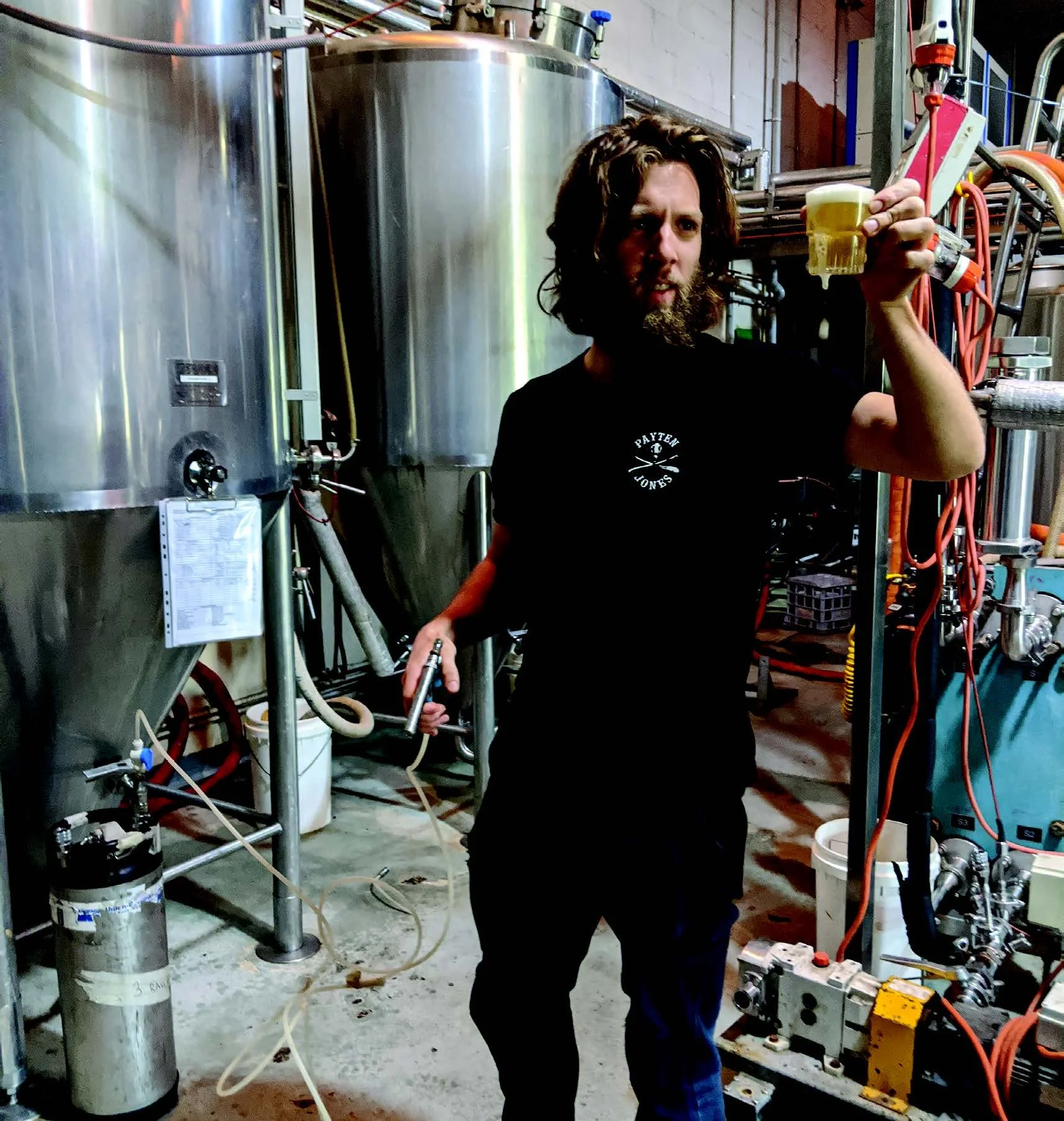
3 Ravens’ Murray Robinson and Carlton & United Breweries’ Katie Jessup talk about what goes into making the next round and how a traditional Norwegian yeast culture might be the next big thing in craft brewing.
Thanks to the Swedes, ordering a milkshake at a bar on a Saturday night is now a perfectly normal thing to do. Local versions of Swedish brewery Omnipollo’s ‘milkshake’ style of Indian Pale Ale became an instant favourite with Melbourne craft beer lovers. ‘We started doing it about a year ago with our Salted Caramel Milkshake IPA,’ says Murray Robinson, brewer at Melbourne independent brewery 3 Ravens. ‘We hadn’t had a response to a beer like that ever. We did eight batches back-to-back and they were all sold out before we’d even canned them.’ The rich texture that people so love about this style of IPA owes much to the molecule structure of lactose. When used in ale and lager brews, lactose sugars survive fermentation, giving the beer extra body and creaminess.
Not so long ago, Melburnians might have gulped down their beer without a second thought of the complex science or skilled makers behind it. But with the flourishing of artisan beer brands over the last few decades, drinkers are increasingly curious about how boutique breweries can concoct so many exciting varieties. Appreciating the art of transforming raw ingredients into a batch of their signature stout, for instance, is all part of the attraction. Dozens of microbreweries across the city have built brew pubs—nestled among working tanks, tubes and kegs—blurring the boundaries between front and back-of-house. 3 Ravens regularly offers tours, guiding visitors through each stage of production.
This shift in Australian tastes and drinking environments is recognised by producers, both big and small. Katie Jessup, Product Development Specialist at Carlton & United Breweries (CUB), has seen the nation’s drinkers embrace more experimental flavours. A good example is the explosion of sour style beers. ‘Sour Belgium lambics and gueuze beers have always been around, but the modern sours are what everyone is bringing out now.’ Katie also credits the take-up of sour beers with its appeal to a broader range of drinkers; sour beers have a lighter, fruity taste which appeals to those used to drinking wine or cider. She says the trend has helped shift old attitudes that drinking beer, especially for women, is somehow uncouth. ‘Pubs have done a really good job in terms of marketing, even in terms of glassware. Serving beer in a wine style glass at a craft brewery gives a different impression, including the volumes that beer can be consumed in, than say compared with serving it up in a pint.’
Up until a few years ago, Katie would have said that almost all beers could be divided into ales and lagers. She now adds sour beers as the third major category. The distinction largely comes down to the genes of yeast being used in the ferment. For lagers, which includes styles like pilsners, brewers generally use the yeast saccharomyces pastorianus. For ales—think pale ales, bitters and porters—the yeast saccharomyces cerevisiae is used. Weizen yeast is also used in making German wheat beer, which is classed as a type of ale.
‘It’s always yeast used in fermentation—plus exceptions!’ says 3 Ravens’ Murray. ‘We do make sour beer, which involves the use of bacteria as well.’
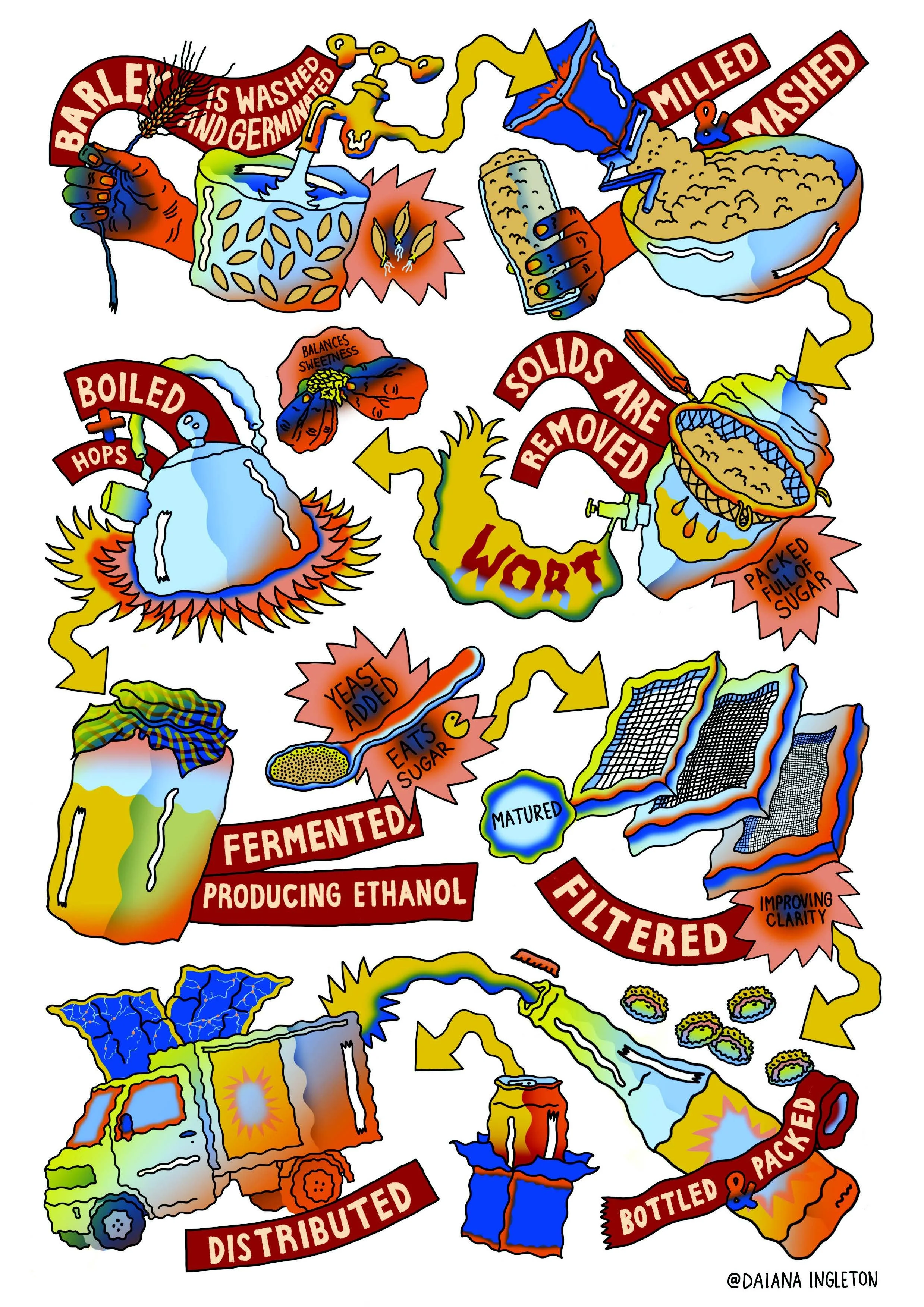
In Australia, beer is usually made from three other major components: malted barley, hops and water.
Barley is not the only grain that can be used to brew beer. ‘They use rice in Asian beers, in America they use corn and in Africa they use sorghum; generally whatever is the cheapest carbohydrate,’ says Katie. Brewing is all about manipulating natural processes of energy conversion. Malting the grain is crucial because the germination of the seeds triggers its enzymes.
During the mashing stage, the enzymes modify the malted grain’s starches, a type of carbohydrate, into various types of sugars. Fermentation happens when the brewing yeast takes the simplified sugars from the starch in the malt and turns them into alcohol and carbon dioxide. The yeast isn’t able to metabolise starch and needs the enzymes in malted barley to break down the carbohydrate into smaller-chain sugars so the yeast will be able to eat it. ‘Alcohol is actually a waste product for the yeast,’ explains Katie, ‘it gets all the energy it needs from the sugars and it spits it out.’
Wort is the liquid extracted from the mashing process and is essentially unfermented beer. Once lauded, which separates the wort from any residual grain, it is sterilised during the boiling process. Brewers will then add hops. ‘Hops is a herb that’s traditionally been used in brewing for about 600 or 700 years,’ says Murray. ‘We settled on hops as the mainstay product to use in the boil because it’s antibacterial, and is a nice bittering herb: the bitterness is great for flavour balance. Not all of the sugar in malt is fermentable so the bitterness balances its sweetness.’ Different varieties of hops produce different flavour profiles. Cascade hops, for example, yields intense floral and spicy notes, often used in pale ales and IPAs. Earthy citrus tones are found in the Pride of Ringwood hops, a variety traditionally used by CUB to bitter all its beers.
Typically, the boiled wort is then quickly cooled and fed into the brewery’s fermenter. ‘What we do is pump oxygen into the wort, and that allows the yeast to be able to grow,’ says Katie. While a small amount of fermentation does occur when the yeast is in this aerobic state, usually after about a day most brewers will then ‘pitch’ or add the yeast. ‘You want healthy yeast,’ she notes, ‘so it can complete the fermentation for you.’ The yeast uses up all the oxygen and goes into an anaerobic state. Then, once all the simple sugars have been eaten by the yeast, fermentation will cease and the yeast will go back into hibernation. Brewers collect the yeast to reuse again later and any sugars left behind are sweeteners. Sometimes more hops or other flavouring ingredients will be added, or the beer is clarified to get a brighter beer colour. The final stages involve carbonating and canning, or kegging, the finished product.
The highly controlled nature of modern brewing can seem a far cry from ancient practices, when microorganisms would randomly make their way into batches. In sixteenth century Europe, a family might leave a window open to cool off a hot mash, allowing whatever floated on the breeze to infiltrate the brew, sometimes enhancing it, sometimes spoiling it. Different yeasts were cultivated across regions, or even by individual farmhouses, who would often share their yeast with neighbours. From the late nineteenth century onwards, many of the yeasts developed by the larger breweries were captured by laboratories, that keep them alive and clean today. Ordering from yeast labs is a convenient way to source different types from around the world, although Murray admits it doesn’t seem quite as romantic.
Kivec, a yeast variety harking back to old Norwegian farmhouse traditions is starting to turn heads in the brewing industry. Murray believes it could be a gamechanger. ‘When we brew our yeast, we generally pitch it at 18-20°C and we’re looking, generally, at a fermentation for about a week up to ten days. A lot of the breweries over there [in Norway] pitch their yeast at high temperatures—40 or 45°C—which for a lot of Australian yeasts is when they die.’ The kivec variety thrives in high temperatures and ferments very quickly.
‘So we’re looking at ferments finishing in two days rather than ten, which means you can dramatically speed up production.’
For breweries like 3 Ravens which don’t have a lot of fermentation capacity, Murray thinks using kivec yeast could be an amazing option to bump up their output. ‘3 Ravens is the perfect wrong-sized brewery,’ he says. ‘We’re Melbourne’s oldest independent brewery, having been around for seventeen years now.’ Murray explains that these days if people open a brewery, it will either be around ten times the size of 3 Ravens, in terms of the production facility, or something about the quarter of the size, often attached to a brew pub in a hip location. While 3 Ravens doesn’t have the economies of scale to compete with giants like CUB, ‘we really nut out our market through niche products.’
‘When I go to the top of one of the tanks and look down, that’s the only time I get sense of how big these batches of beer really are.’
With around forty-five years of brewing experience between them, the three-strong team at 3 Ravens pride themselves on using their expertise to push boundaries and create unique brews. As well as their prized Juicy IPA series, their range has included a host of barrel- aged sours, natural wine refermented sours; even collaborations with South Yarra’s Tivoli Road Bakery, using their rye yeast culture in the Pastry Sour Series. Murray thinks that in addition to potentially doubling their productivity, kivec yeast has dynamic flavouring potential. ‘I’d love to see how it performs in a lighter, clean German style beer,’ he says.
While 3 Ravens usually produces 200 litre batches, just one batch made at CUB’s Melbourne brewery in Abbotsford can make enough beer for up to 2.3 million stubbies. The brewery produces many of CUB’s classic brands such as Victoria Bitter, Carlton Draught and Crown Lager. Even after six years of working at CUB, the sheer size of their fermentation tanks still shocks Katie. ‘They can be over 40 meters tall and over eight meters in diameter. When I go to the top of one of the tanks and look down, that’s the only time I get sense of how big these batches of beer really are.’
For large commercial breweries like CUB, ensuring consistency of their products is crucial. Consumers accept, and even welcome, taste variations between batches made by craft breweries, but not so with CUB brand beer. As Katie explains, it goes back to fermentation: ensuring that the yeast, an inherently volatile microorganism, is healthy and produces the same chemicals every time is really quite difficult.
Katie thinks that consumer expectations around sustainability will also increasingly challenge the industry, in terms of lessening their environmental impacts. Reducing their logistical carbon footprint, by sourcing locally grown barley and hops may help breweries win-over consumers, but a bad crop year could affect the security of their supply. Big breweries in particular will need to think carefully about how they will responsibly source their grain. She’s also interested to see if more breweries will venture into using organic or Australian native ingredients; along with homegrown yeast varieties.
What’s clear is that local brewers will have their hands full, continuing to tinker with fermentation and brewing techniques. This is good news for Melbourne’s thriving beer-drinking community; the more experimentation going on, the more weird and delightful brews on offer.
MELBOURNE BREWERIES AT YOUR FINGERTIPS
If you can’t make it to one of Melbourne and surrounds’ excellent craft breweries, why not let them bring the beer to you! Forkful sussed out some of our superb breweries offering online delivery during the COVID-19 restrictions, so you can taste some of their best brews from the comfort of home. And when things are back to business as usual, their bricks-and-mortar brew pubs are a delight to visit as well!
3 RAVENS
1 Theobald Street, Thornbury
Located on Thornbury’s industrial side, 3 Ravens has been pumping out bespoke beers since 2003. Try their refreshing Acid Original Sour Beer with tropical aromas for that summer vibe, or the creamy 3Ravens Black, a silky stout perfect for wintery evenings.
BOATROCKER BREWERS AND DISTILLERS
34 Macbeth Street, Braeside
Founded in 2009, Boatrocker is the brainchild of Matt and Andrea Houghton, who started selling beers from the back of their car. Forkful loves Miss Pinky, their raspberry-rich take on a Berliner weisse.
BODRIGGY BREWING CO.
245 Johnston Street, Abbotsford
Bodriggy is a community-minded brewery which has found a special place in the hearts of Abbotsford’s locals. We dig the velvety feel of Bodriggy’s Cosmic Microwave New England IPA.
HOP NATION
6/107–109 Whitehall Street, Footscray
Tucked away in a warehouse that once operated as a whale fat candle and wax factory, Hop Nation is proud to call Melbourne’s westside home. Our pick, for something a bit different, is their mango-flavoured gose: The Punch.
HOLGATE BREWHOUSE
79 High Street, Woodend
A pioneer of the Victorian craft beer movement, this family-owned brewery is situated in the lush town of Woodend, a 45-minute drive out of Melbourne. Holgate’s Mt Macedon Pale Ale remains a steadfast favourite, while their Choc Porter Temptress makes for an exquisite treat.