
THE DANGER OF CONVENIENCE
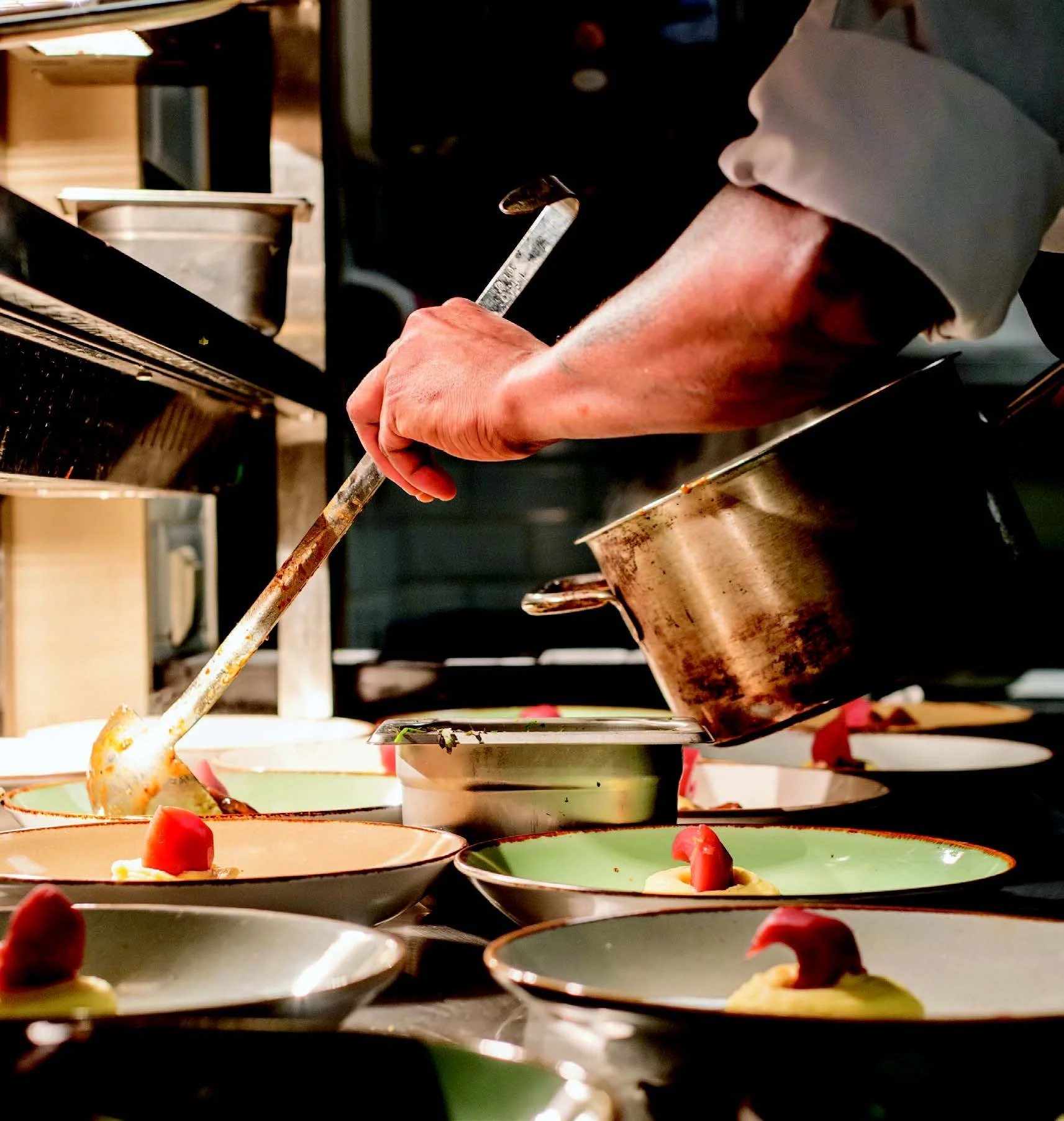
WORDS BY EMILY CECCHETTO
Food wastage is one of the biggest issues in the hospitality industry. Not only does it have a significant detrimental impact on the environment, it also comes at a huge economic cost. As restaurants and cafés strive for ways to become more sustainable, fermentation and the slow food movement could be the answer.
In Melbourne, food is everywhere. Restaurants and cafés are on every city street and a supermarket is almost always only a stone’s throw away. With a few taps on your phone, you can have food delivered to your doorstep and get nearly every kind of dish or ingredient you want all year round. A thriving and diverse food culture is a vital part of Melbourne’s identity, but all of this convenience comes at a cost.
Over my five years working as a waitress at many Melbourne cafés, I have seen a shocking amount of food end up in the bin. For every plate that comes back to the kitchen empty, there are several more that come back with the meal only half-eaten. With the Australian Bureau of Statistics estimating that at least 40% of food purchased as stock for restaurants, cafés and food service businesses goes to waste, food wastage is clearly one of the hospitality industry’s biggest issues. However, as the links between the environment and food become more apparent, we have begun to see a slight shift. Café and restaurant owners have recognised the problem and are coming up with unique ways to become more sustainable; one small, but meaningful change has been the uptake of fermentation.
Tim Mann, the director of Fitzroy café Grub, says that fermentation can help shape how menus are developed. ‘It’s imperative that the range of offering is relevant––to food trends, customers, local circumstances, wastage and costings,’ explains Tim. ‘Fermentations are particularly valuable for us due to their shelf longevity, and their well-documented dietary benefits. They offer a great flavour profile and are relatively easy to store and keep for long periods of time.’
Fermentation practices have surged in popularity in recent years, largely thanks to the ‘slow food’ movement. People have become more conscious about what they put into their bodies and how their food is produced, and therefore are looking towards more traditional ways of preparing food. ‘Fundamentally, all “trends” have one thing in common—they aim to simplify,’ says Tim, ‘whether that be in the form of purifying tastes or the means of production. The slow food movement continues to be driven by a desire to “get back to nature” and reduce impacts on global footprints and wastage in terms of production.’
In the 2018 National Waste Report—prepared by the Department of the Environment and Energy—it was estimated that the economic cost of food wastage in Australia is more than $20 billion per year. The report found that in 2016–17, five metric tonnes of food wastage was generated with 76% going to landfill— and that’s excluding farm waste. Finding ways to use food scraps and reduce the amount of waste coming out of restaurants, cafés, supermarkets and other food service businesses is vital if we want to reduce our environmental and economic impact.
Run by duo Zoe Birch and Lachlan Gardener, Hurstbridge restaurant Greasy Zoe’s is leading the pack when it comes to adopting more earth-friendly practices. The concept for the restaurant arose from the couple’s frustration over excessive food waste. ‘The hospitality industry is just a really unsustainable, wasteful industry,’ Zoe states. ‘The amount of food you see come in and you think, “this just isn’t sustainable.” We’d worked in so many restaurants and thought “there’s just got to be a better way, an easier way, where it doesn’t have to be like this.”’
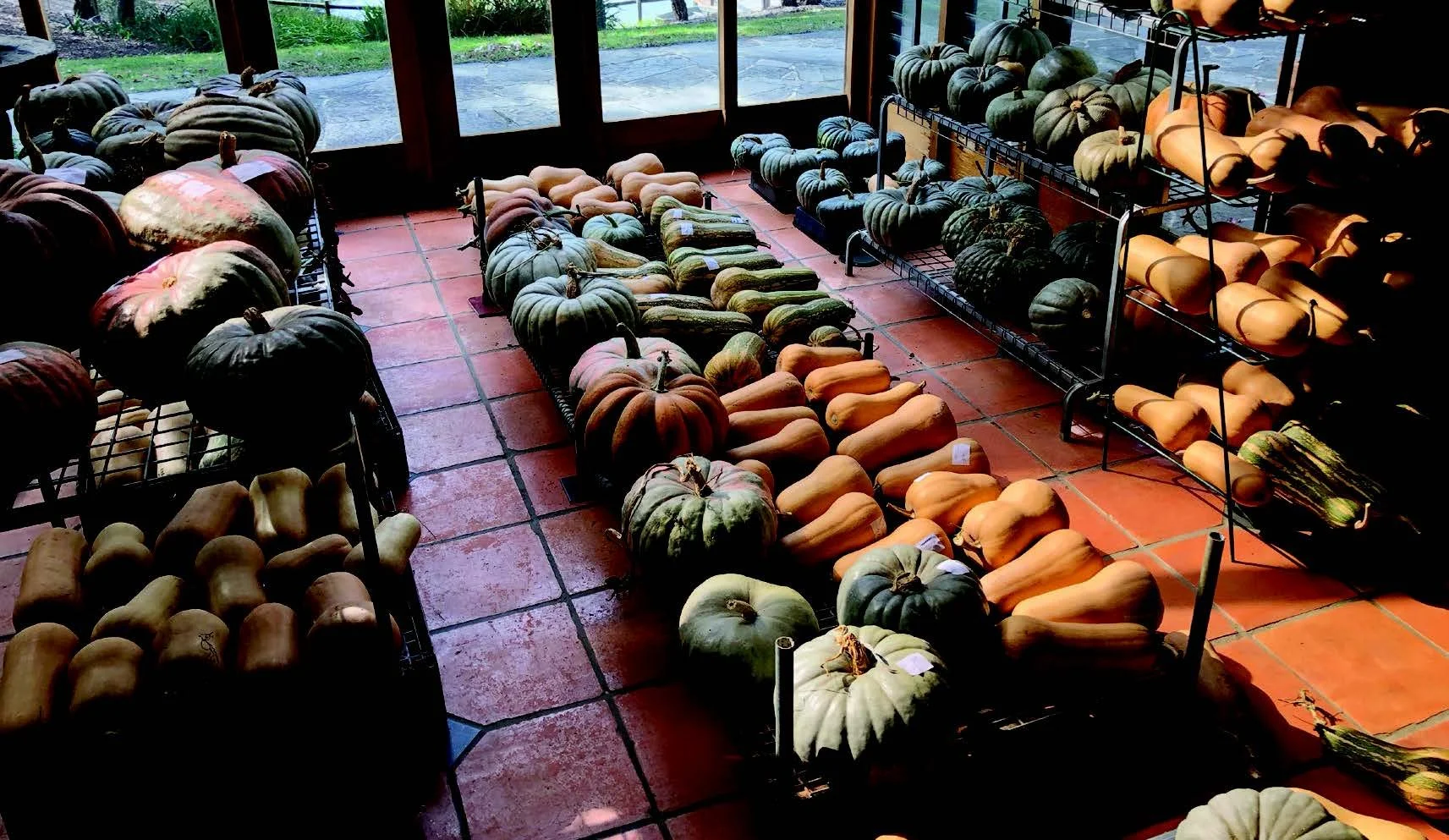
Seating only twelve people at a time, Greasy Zoe’s favours a quality over quantity approach. With a predominantly vegetarian set menu, which changes daily, Zoe and Lachlan have a direct hand in how the produce for their restaurant is grown and managed at every stage. As Zoe describes it: ‘We have three local farms that we work with—we pick all the vegetables every week and we’re talking to these farmers all the time. We’re going there, we’re planting things, we’re weeding, we’re doing everything with them. We also take all of our green waste and that all gets composted at one of the farms.’
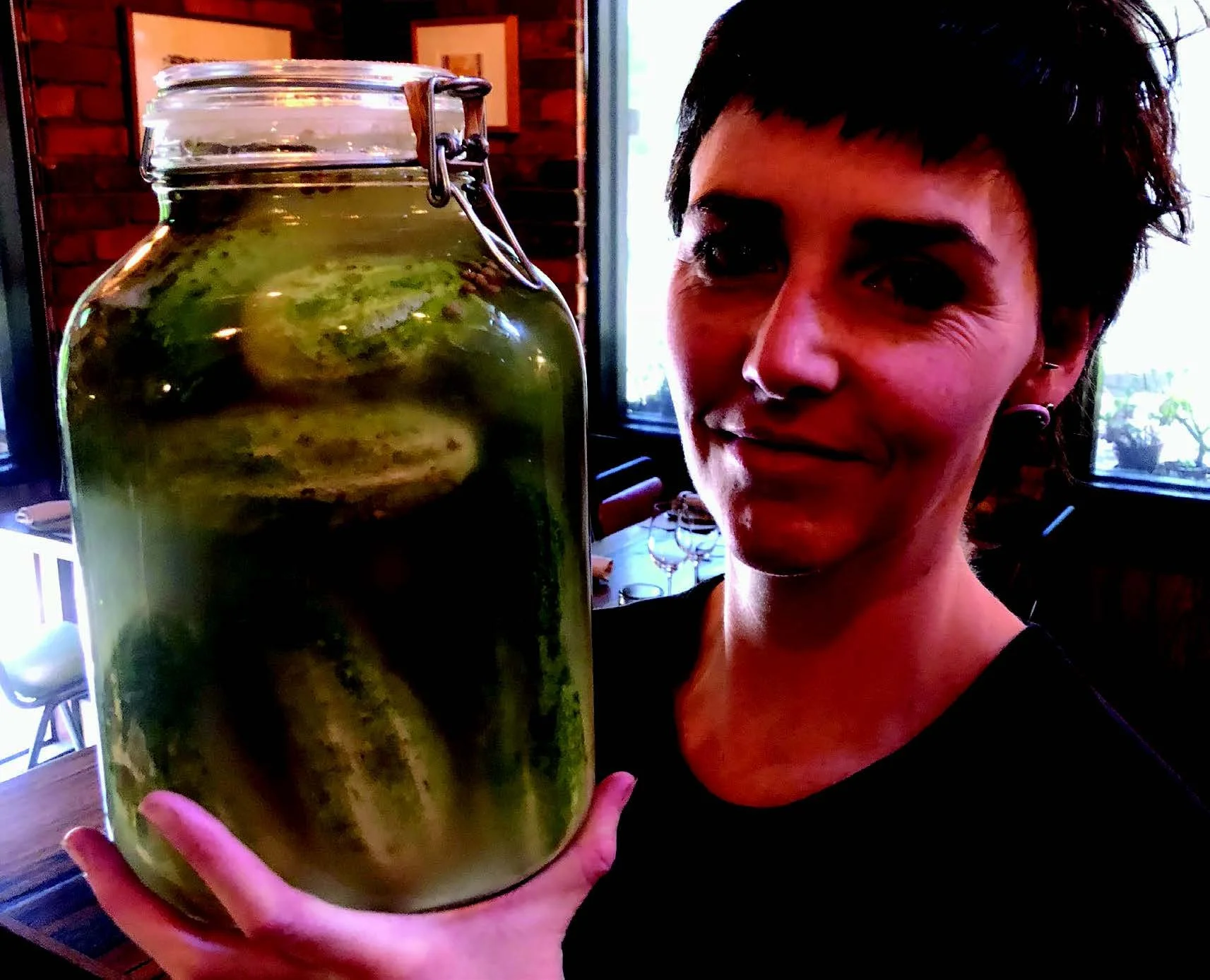
Engaging small suppliers means they work with what’s available and preserve a lot of their produce. ‘We do heaps of preserving,’ explains Zoe. ‘We’re salting things, we’re fermenting things, we’re drying things.
We’re turning things into jams and jellies and chutneys, into kombucha, into cordial. We make all of our own cheese; we make camembert, we make blue cheese.
We do all of our own cured meat: salami, bresaola, pancetta. We salt and smoke and cure egg yolks. It’s just constant.’
At Greasy Zoe’s, almost everything gets used and repurposed. ‘We make the vinegar that we use. If there’s leftover wine or beer, we’ll just turn it into vinegar.
We have four vinegars at the moment: white wine, red wine, beer and apple cider vinegar. Especially being a small business, you just don’t want to waste anything.’ Working with small farms also means their menu is determined by the seasons: ‘Winter is tricky, we’re just working completely seasonally so we have to be pretty careful. If you’ve got a farmer who says they’ve got 30 kilos of apples and they’re not going to get any more, then you take those apples. You think, “how am I going to make these last?” I could turn them into a jelly. I could turn them into a jam, a paste. Or I could peel them and put the peel into my apple cider vinegar. I could make sorbets. You’re just constantly thinking.’
At the time of writing this piece, government measures to prevent the spread of the COVID-19 virus during the global pandemic has restricted restaurants, cafés and pubs to only doing takeaway or delivery. For a café like Greasy Zoe’s, adjusting to doing business under the new rules hasn’t been as difficult as it might have been for many conventional restaurants. Faced with a stock room full of fresh produce, and more on order from their small suppliers, Greasy Zoe’s has to use up these ingredients and somehow keep reaching customers who can no longer come into the restaurant. Food preservation, including making fermented products, is a key part of their strategy.
‘We are lucky that we do have all the skills to do these preserving things. It’s worked in our favour in the current situation,’ says Zoe. Lachlan and Zoe have been turning fresh food from their stock room into jams and chutneys and are including them in the produce boxes they are now selling to customers. ‘At the moment, we’re doing a produce box that has a loaf of our sourdough, a block of our cultured butter, some fresh produce such as local mushrooms and potatoes, a spicy tomatillo sauce, green tomato chutney, apple jelly, kohlrabi remoulade, homemade mustard and vinegar.’
A business model like Greasy Zoe’s which uses techniques like fermentation and pickling to cut down on wastage could be the way forward for the food service industry. While Greasy Zoe’s only operates at a small scale, their approach to sustainability has the potential to be more widely replicated and adapted. In hospitality, convenience and cutting down on the costs associated with suppliers are top priorities, particularly for small business owners, but the accumulated losses from food waste may be greater in the long run.
‘With the current climate crisis, we’re all looking for ways to hold off the impending catastrophe; fermentation could be a key part of the solution.’
Research into lab-grown food, driven by the wider push to reduce harm to our environment, could see fermentation become an integral part of our systems for food production. On the outskirts of Helsinki, earlier this year, scientists turned water into food using bacteria from soil and precision fermentation. The hope is that more food could be made using this technology which uses less water and less land, helping to curb deforestation. Scientists also believe it could cut down on pollution, the use of pesticides, and animal exploitation. While widespread use of this technology could undercut our farming industry, based on how it currently operates, it also promises a future where food could be grown virtually anywhere, at a cheaper cost, with more nutrients and fewer environmental impacts.
With the current climate crisis, we’re all looking for ways to hold off the impending catastrophe; fermentation could be a key part of the solution.
EAT GREEN AND REDUCE YOUR WASTE
These places are just some of those in Melbourne working to reduce their waste and environmental impact. Visit them to find great sustainable options and some absolutely delicious food!
GREASY ZOE’S
3/850 Heidelberg–Kinglake Road, Hurstbridge
Greasy Zoe’s is a restaurant whose driving force is sustainability and limiting its environmental impact. Produce is sourced from small local farmers of The Nillumbik and handpicked by Zoe’s two-person team. The menu varies daily and is predominantly vegetarian and seasonal. Zoe’s prides itself on making their own cheese, cured meats, vinegar, butter, sourdough and a variety of other products. Any leftover green waste is taken back to the farms and turned into compost. Greasy Zoe’s is a restaurant where you can dine on handcrafted meals, knowing that they have been treated with care at every stage of the process.
FRIENDS OF THE EARTH FOOD CO-OP
312 Smith Street, Collingwood
Friends of the Earth is a not-for-profit organisation that is all about social and environmental justice. They work toward a sustainable and equitable future, and one part of their work is running a food co-op. The food co-op sells nearly everything in bulk, helping to eliminate plastic waste—they even have package-free tofu! Take along your jars and reusable bags and you can pick up all of your household staples, as well as specialty items. Head here for all your organic grocery needs, and if you’ve got the time, stop in at their organic café for some nutritious and seasonal lunch options.
MESA VERDE
Level 6, 252 Swanston Street, Melbourne
If you’re looking for vibrant, fresh Mexican food made with the environment in mind then Mesa Verde is the place to go. This Mexican cantina ensures they have the freshest herbs by taking a green approach to food wastage; they turn their vegetable scraps into fertiliser and use it to grow Mexican herbs and chillies on-site. They go one step further by collecting and using rainwater to reduce their water use. Mesa Verde even have their very own rooftop worm farm. On top of all that, they have great tequila and tacos.