
Classic German Sauerkraut
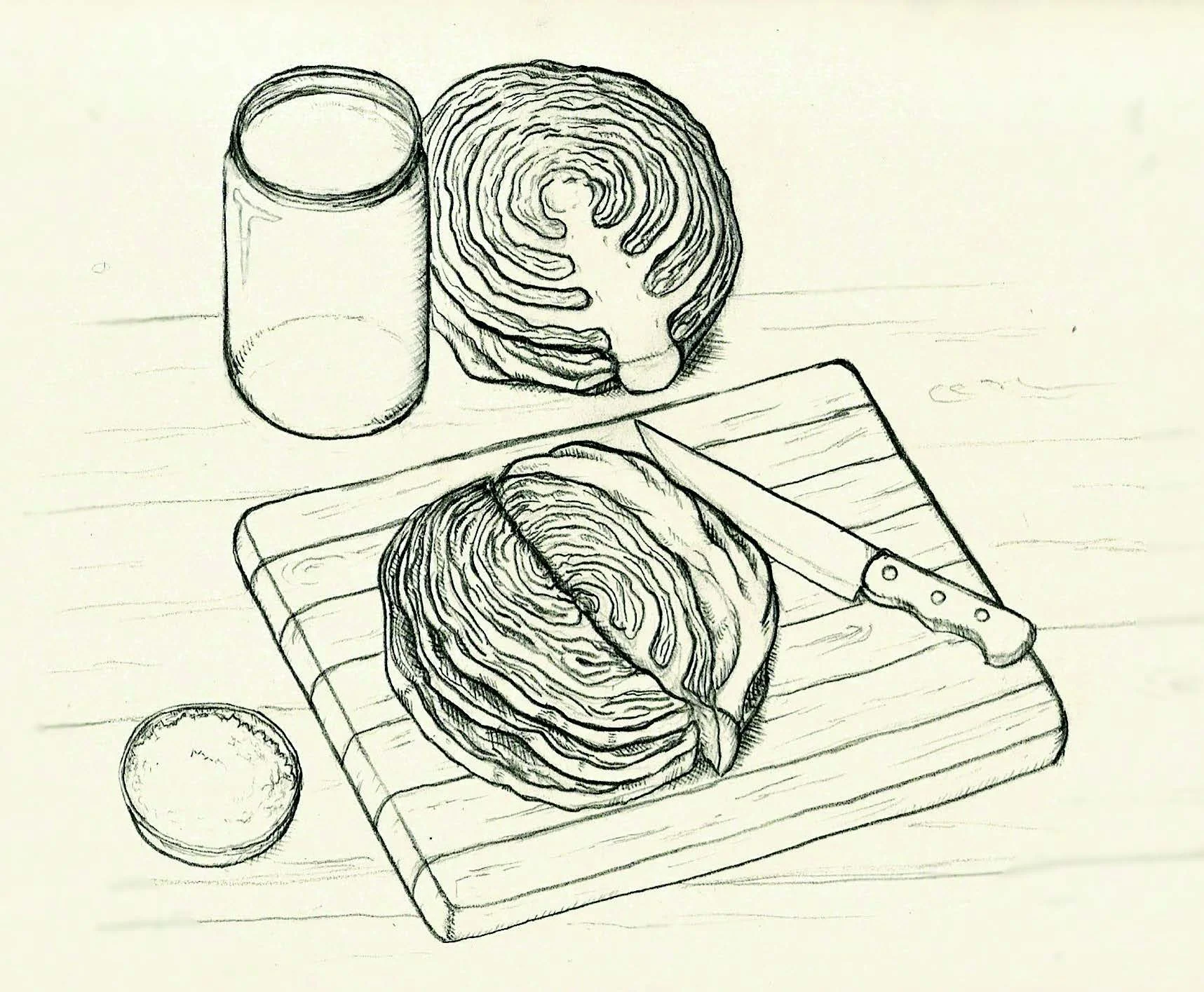
Forkful enlisted the help of Steven Godden, a Melbourne artist now based in Berlin, to share his tried-and-true sauerkraut recipe—learnt from his German friends.
‘Sauerkraut’ is a German word for any preserved cabbage, whether pickled or fermented. Here, in Germany, sauerkraut is often braised with onions and lard, then served with sausages and mashed potatoes. The heat kills much of the bacteria, although ‘kraut is still good for the gut and makes for perfect, warming, comfort food on long, cold winter nights. Rotkohl, or red cabbage, is sometimes preserved with sugar or apple juice to sweeten it. Cinnamon goes great too!
ingredients
1 medium-sized white/red cabbage
1 teaspoon each of mustard seeds, caraway seeds and juniper berries
2 teaspoons of salt
1 tablespoon to 1 cup of brine
method
Shred the cabbage and cut into strips using a grater or knife.
In a non-metallic mixing bowl, combine the cabbage with the spices and salt.
Add a layer of cabbage to a sterilised and sealable glass jar; with a wooden spoon/pestle, mash the cabbage until the juices come out.
Repeat until the jar is mostly full, packing the cabbage in tightly and leaving a 2 cm gap at the top.
If required, top up the jar with brine so that all of the cabbage is covered and the liquid reaches the brim; leave it to rest for 30 minutes to 1 hour.
Cover with a muslin cloth to protect against dust and store the jar in a cool, dry location with a stable temperature, between 18 and 21 degrees Celsius.
After one week, check the sauerkraut and skim off any foam or grime.
It should taste pleasantly vinegary and pickle-ish at this stage. If not, top up with additional brine to ensure that it is filled to the brim.
Check every 2 to 3 days, until the taste is right.
NOTES:
Serve cold to enjoy full gut-health benefits.
When ready to eat, seal and refrigerate sauerkraut, where it will keep for up to six months.