
AN ITALIAN, A VIETNAMESE AND TOMATOES
By Nhi Vo
I have the opportunity to work for Tony at Il Maestro in Oakleigh through a referral. My first impression of him was his passion for his craft and business. There is never a dull moment working with Tony. During my shifts, I often hear his long rants about a particular ingredient or compliment the fresh batch of doughs. He skilfully bakes his pizzas on a rotating hybrid oven,bake while yelling over the noise, greeting his customers on the other side of the counter and calling the kitchen for service. Though chaotic, the whole place seems to be operating just fine.
Working at Il Maestro reminds me of my grandparents’ kitchen in Viet Nam during our family’s weekly gatherings. My aunties crowding the small kitchen, noisily arguing about adding salt to the boiling pot of broth, and their constant nagging at us to set up the table. It always ends with a full table of delicious food, happy bellies and satisfied palates.
Italian cuisine is probably one of the most common in the world, famously known for their pizzas and pastas. Victoria, predominantly known for its Italian community, has some of the best Italian restaurants in Australia. Intrigued to learn more about their culture and food, I asked Tony for a short interview to talk about his background, family traditions and … tomatoes.
Tony’s parents immigrated to Australia from Sicily in the 50s, just after World War II ended, looking for a better future. Born and raised in Australia with an ethnic background, Tony struggled to fit in as his parents held on to their heritage as Italians, ‘I was brought up traditionally Italian with food and culture’ he said.
How Tony came to work in the food industry was not a rosy story of a childhood passion. It came rather as a trade of choice. ‘In those days, not a lot of people went to university like they do now … most people didn’t even finish high school. You didn’t get a lot doing year twelve.’ After spending two years living in Sicily and working at a pizzeria there, Tony decided to continue his career as a restauranteur in Australia, starting with his first business with his brothers—Fazio’s in Hampton—built with a vision to share his mum’s cooking with everyone.
‘It became a thing that when we were growing up, mum did a lot of cooking and we used to have people over and people used to love mum’s cooking and it was just simple peasant food … And so, we, we always had the idea that we would cook like mum … and sell it, and we think that people would love it the way our family and friends liked it. And that’s sort of how it came about.’
Through some casual exchanges on other occasions, Tony has sometimes expressed his effort in trying to preserve the essence of the Italian tradition of cuisine, but if he wants to scale the production for commercial use he has had to make a few compromises especially when it comes to produces and cooking techniques. When asked about the cooking style at Il Maestro, Tony explained that the food here was seasoned to fit better with the Australian palate and preferences while still maintaining the Italian authenticity as best as possible—‘Our cook is eighty per cent to what you would get if you went to Sicily.’
The food you had when you were young holds a special place in your memory. For Tony, it was his mum’s meatballs.
‘My mum, every Sunday—is very traditional—would make meatballs, put them in the sauce and we’d have pasta. They’ll sort of cook meatballs and bits of cheaper cuts of meat. They’ll put it in a sauce and slow cook it and I can always smell that on a Sunday morning … that’s what we’d have for lunch, yeah.’
The Italian meatballs at Il Maestro are juicy, soft and cheesy, quite different to the chunkier texture of the xiu mai—a Chinese style meatball we have in Viet Nam. Coming down to Il Maestro, you’ll find meatballs in almost every menu item: meatballs with dipping bread, meatballs pizza and meatballs pasta. Needless to say, Tony takes great pride in his signature dish.
Pizza, as it turns out, is not a home cooked thing in Italy. ‘Pizza has always been … a going-out food’ Tony explained. The humble pizza bread, like that of the Vietnamese banh mi, has a relatively rustic and crafty origin. Made from leftover bread dough with basic tomato, anchovies and olives—‘salty stuff’—plenty of olive oil, no cheese, and eaten as a ‘bready thing’. What makes a good pizza? Some would say it is the cheese, the tomato sauce. For me, a good pizza starts with the dough. A well proofed dough with a stretchy texture will give your pizza an airy and nicely crisp base which can elevate any toppings you put on it.
Every Lunar New Year, Vietnamese families will gather around and make their traditional sticky rice cakes: banh chung and banh tet, I asked Tony if Italy has a similar tradition.
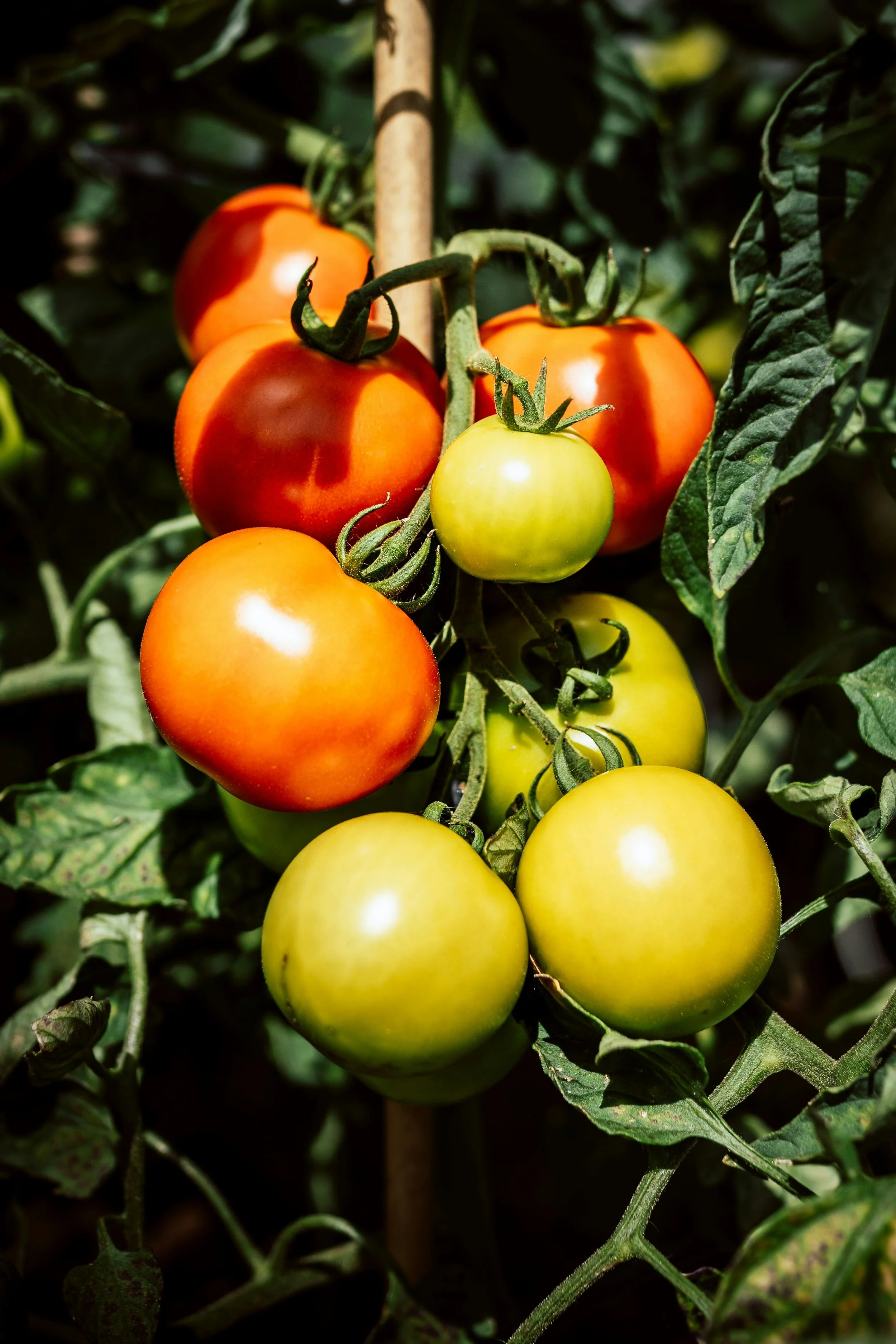
‘… So it’s always done at the end of the tomato season, which is at the end of summer. So all the tomatoes that are left on the vines, they would pick them all and they would cook them and they would bottle them. They’d process them, you know, they’d make them different ways, some chunky, some finer, and they’d bottle them, and that would be your sauce for the year.’
A yearly gathering to make Napoli sauce is the tradition of many Italian families. More than just a simple cooking activity, these gatherings are what keep family members close. And the results are not just bottles of tomato sauces, but the stories shared and the conversations made.
On the topic of tomato sauce, I asked Tony about his favourite tomato variety to use in his cooking and he said it is the San Marzano tomato. When choosing tomatoes for your sauce, it’s better to choose the variety which are less watery and are fleshy. The San Marzano tomato is an heirloom variety found in Italy, they are long and meaty which is perfect for making pizza sauce.
‘With a lot of Italian dishes, they’re very basic. It’s always about the produce’ Tony said. Coming from Sicily, a farming region of Italy, Tony pays close attention to the produce he uses. Unlike Asian cooking with a multitude of condiments, Italian cooking uses minimal seasoning with only pepper and salt. Good produce requires little to no seasoning to taste good.
The humble tomato, with its long history dated back to the Aztec’s, has changed a lot through cultivation. A simple search on the internet will show you a plethora of tomato varieties from common to exotic ones, and among them there are the heirloom varieties—open-pollinated tomatoes passed down through generations. Not every family has the same traditions and rituals, just like how each Italian family has their own version of tomato sauce, or how my mum’s cooking is different from my aunties’ even though they grew up together eating the same food. But there will always be something unchanged, something fundamental, something that defines your roots. For the Italians, it is the tomato in their everyday meals.
Talking with Tony was delightful as I learnt so many things about Italian cultures and food. It was also very interesting to find similarities between our cultures. This connection feels extra special as we—an Italian and a Vietnamese—are in Australia, the land of multiculturalism. If you have a chance to visit Oakleigh, come say hi to Tony and try his delicious meatballs at Il Maestro!
Il Maestro
16 Burlington St, Oakleigh VIC 3166
(+61) 395631190