
HOMELY PERSIAN MEALS: KUKU SABZI
By Tanisha Kaur
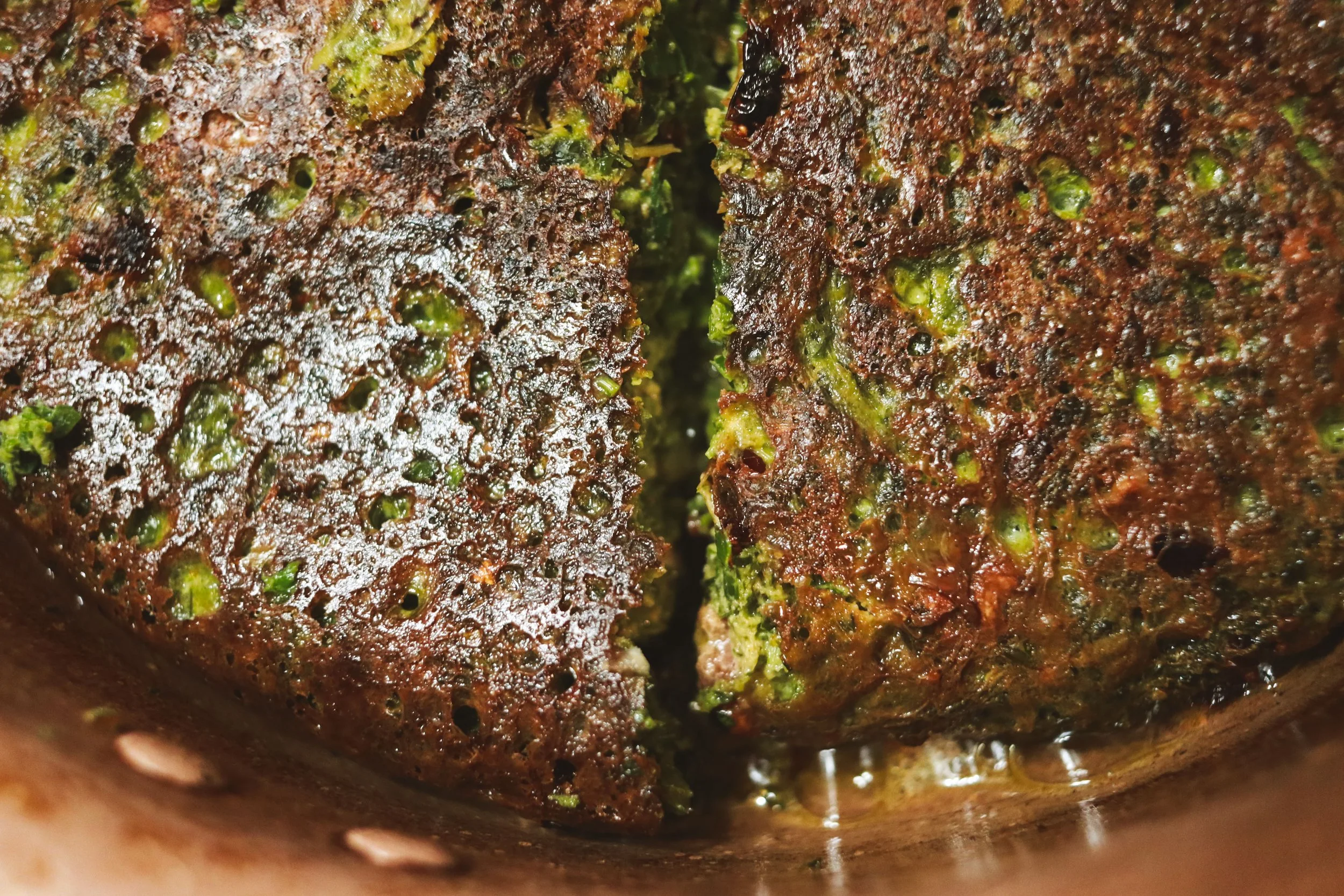
Kuku sabzi (roughly translating to baked omelette herbs) is a rich and flavourful herb omelette traditionally served in a sandwich with a mayonnaise mixture of tomatoes, onions and khiar shoor (Persian pickled baby cucumbers). As a staple dish during Nowruz (Persian New Year), it can be eaten at any time of day and is known for its iconic herbaceous fragrance and hearty nature.
People often tell you that you can’t exactly relive the past, but you can. Food is one of the guaranteed ways to defy time. The moment you eat something that truly and utterly ties you to a time and place, you relive a piece of a past you have lived. Kuku sabzi brings me back home, watching my mother make it for me when both of us were too stumped to figure out what else should have been eaten instead. For my parents, it takes them back to their years in Iran, where they had their mothers make it for family gatherings.
Every time the dish has passed down a generation, it has carried a piece of the maker’s soul with it—a piece that could not be replicated but served enough purpose to be not quite the same, but good enough. The bittersweet beauty of this recipe is rooted in its subtle differences, so it might not be the same when you make it, but I assure you that it will be good enough.
Ingredients
The kuku sabzi
¾ cup dried kuku sabzi herbs
OR (in equal quantities)
Parsley
Cilantro
Dill
Chives
3 whole eggs
1 white potato (peeled, raw and grated)
1 tablespoon flour
Salt and pepper
Oil
The mayonnaise mixture
1 red onion (thinly sliced)
1 tomato (thinly sliced)
4-5 khiar shoor (thinly sliced)
Mayonnaise
The sandwich
2 slices of toasted bread
Butter (optional)
Lettuce (optional)
Method
If you are using dried herbs, soak about a handful of the mixture (yes, this recipe relies on eyeballing it and going with your gut, good luck) in room temperature water for roughly 30 minutes. If you are using fresh herbs, skip this step but do ensure that they are finely diced.
Drain out the water from the herbs, making sure to take handfuls of the mixture so you can squeeze any liquid out as well. This part is messy but essential because you want your herbs damp and fairly crumbly, not wet and sticky.
To the same bowl, add 3 whole eggs and the grated raw potato before giving it a good stir. The ideal consistency after mixing should be fairly thick with mere traces of the eggs. If your mixture looks too wet or eggy, add more herbs until it feels right. Trust your instincts. Finally, mix in your flour before finishing it off with salt and pepper to taste.
Bring a well-oiled pan to a high heat. Once achieved and the oil is hot, spread out the entirety of your kuku sabzi onto the pan, quite like you would a pancake. If you want crispier edges, make sure the mixture touches the sides of the pan. Alternatively, instead of making one big omelette, you can make smaller ones (though the cooking time for those will vary, and frankly, why make life more difficult?).
You want to cook this covered on a high heat for 10-15 minutes, or until the edges turn crispy to your liking. When your gut tells you it is time, flip the kuku sabzi and leave it to simmer for another 5-7 minutes on a low heat with the lid on to keep the steam trapped. It should have risen a bit (thanks to the flour we added). When it is done cooking, take it off the stove but leave it in the covered pan to continue to steam while you prepare your other ingredients.
In a bowl, add your eyeballed quantity of mayonnaise. To this, add your thinly sliced red onion, tomato and khiar shoor. And before you think: oh, so they’re kind of like gherkins—no. Gherkins are prickly and taste sweeter, but if you must substitute, at least use pickles. You want something tart, crunchy and smooth.
Once your mayonnaise mixture is adequately mixed, toast your bread slices. You are now ready to serve!
Serving
Take your warm kuku sabzi and cut it into the same-sized pieces as your slices of bread.
You can optionally add butter to your bread before placing the kuku sabzi on top, but I don’t really do that. Cover the top of the kuku sabzi piece with your mayonnaise mixture. I frankly believe in more-equals-better, but it is your plate and your call. You can also optionally add washed lettuce.
Finally, as most sandwiches are made, place your other piece of bread on top and squish everything nice and tightly together. Toasting your bread comes in handy here because it will not crumble under the weight or pressure.
Congratulations! You now hold in your hands one of my favourite dishes, so be gentle with it.
