
NINETY SECONDS, OR TWO HAIL MARYS
By Gabbi Lobo
My mum never used a kitchen timer.
The aroma from the pan made my eyes water, but she was unfazed. She stirred the oil and jeera seeds with a short-handled wooden spoon, the end of which had blackened and was no longer round. Unbothered by the hot oil spurting onto her wrists, she turned to me and said, ‘this baghar is the base of any dish, you can make vegetable bhaji, potato bhaji, khichdi—anything—so write this down.’
At 13 years old, it was time for me to learn how to cook my favourite dishes. First on the agenda: egg bhurji. Mum took the chopping board with onion and added it to the cooked jeera seeds. ‘Now say two Hail Marys.’ I giggled, but she responded playfully, ‘Why do you think the food tastes so good?’ And, right enough, her cooking is revered by many of our close friends and family. After moving out of home, I could not find, nor recreate, the same taste made by Mum’s hands. I believed her, then, after countless nights of air-fryer meals.
Together, we said two Hail Marys as the onions became transparent, before adding in ginger-garlic paste and cut green chillies. ‘Say one Memorare.’ I looked at her blankly and she did a double take, looking aghast—‘you don’t know the Memorare?!’
I didn’t know how to explain to her that I wasn’t learning prayers as part of my Catholic girls’ school education, that it was simply a formality at the beginning of our assemblies.
‘Repeat after me.’
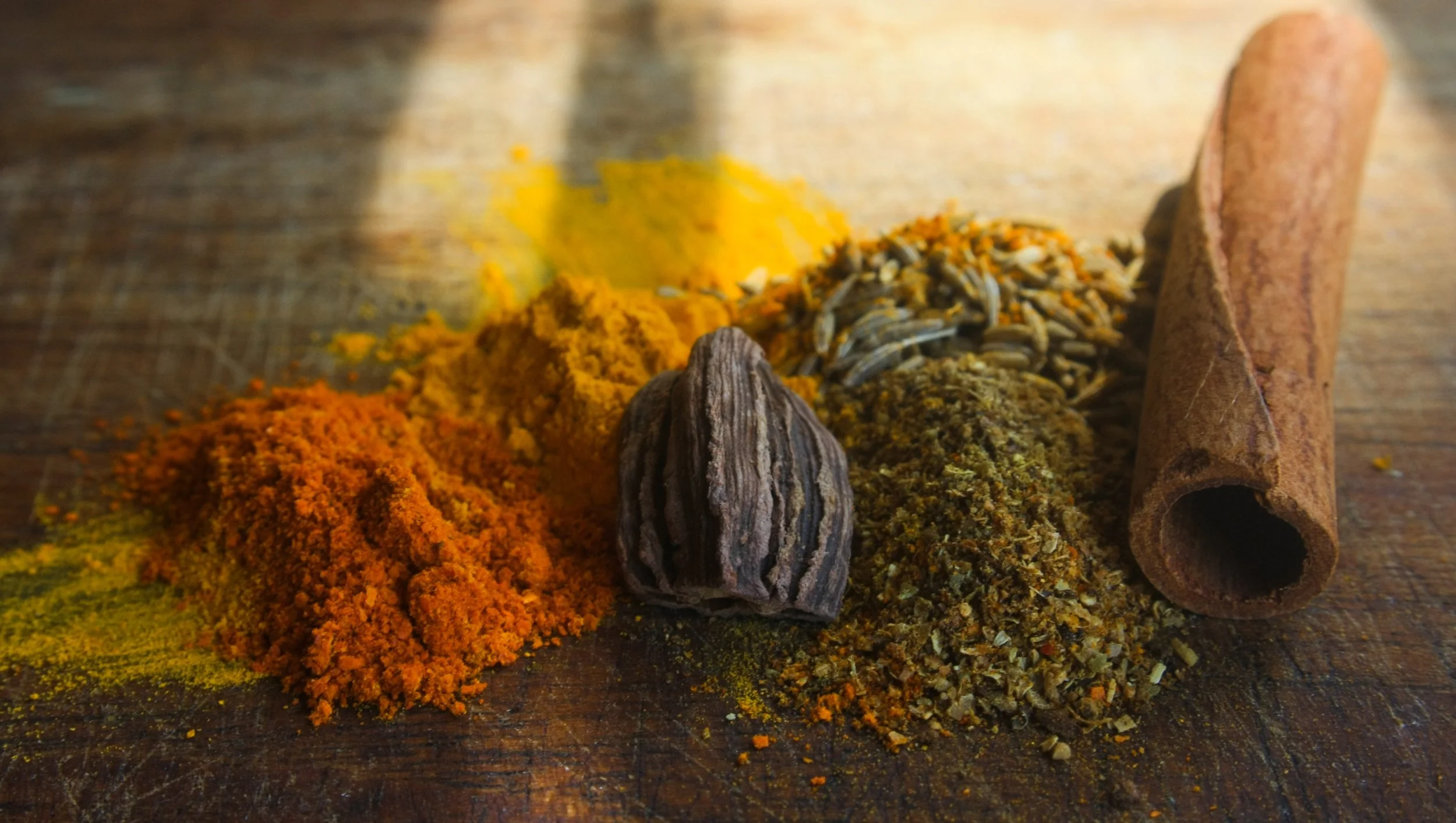
Unfortunately, the repetition took too long—she scrambled to reduce the heat, ‘quickly, add the powders!’ Haldi, red chilli powder, dhaniya powder and garam masala thrown in and mixed into the baghar.
‘Now wait for one Our Father, until you can no longer smell the onion,’—I wrote ‘wait 2–3 minutes’ in my recipe journal.
Teenage-me rolled her eyes, while Mum pointedly closed hers. The kitchen smelled like the familiar symphony of spices I had grown up with. She opened her eyes, gave it a quick stir and said, ‘time for your favourite part!’ I grabbed the chopping board with the diced tomatoes and scraped them into the pan, my inexperienced hands dropping half of it.
‘TUT!’ She hastily grabbed the tomatoes from the searing stovetop and plopped them in.
After adding the salt, she told me to wait until the tomato was ‘putch’(the early stages of mushy) before adding in the pre-beaten eggs. Then, she put the lid on the pan and instructed me to say three Hail Marys—‘let cook for 5 minutes’ being my written translation—before garnishing with freshly cut dhaniya.
These days, I make egg bhurji alone, though it’s been a while—despite it being a simple dish, I never get the timings right. This was the part of her cooking I could never quite replicate, no matter how carefully and methodically I’d transcribed her instructions. The ingredients and the method are crystal clear. But I never mastered the pace.
A Hail Mary said thoughtfully, unhurried, the way she had said at Mass every Saturday evening of my childhood, took almost exactly as long as an onion needs to go soft without going brown. Said quickly, the way I say it—trying to get it over with—it takes maybe two-thirds of the time. I still don’t trust the lid enough to leave it be. I lift it too early. I lift it too late. But under the hiss of the pan, the smell of jeera and haldi finding their place in something complete, I hear her anyway:
‘If it’s still not done, then pray for your mother and father. Then turn off the stove.’
