
THE BEST BOLOGNESE
By Benjamin Marchesan
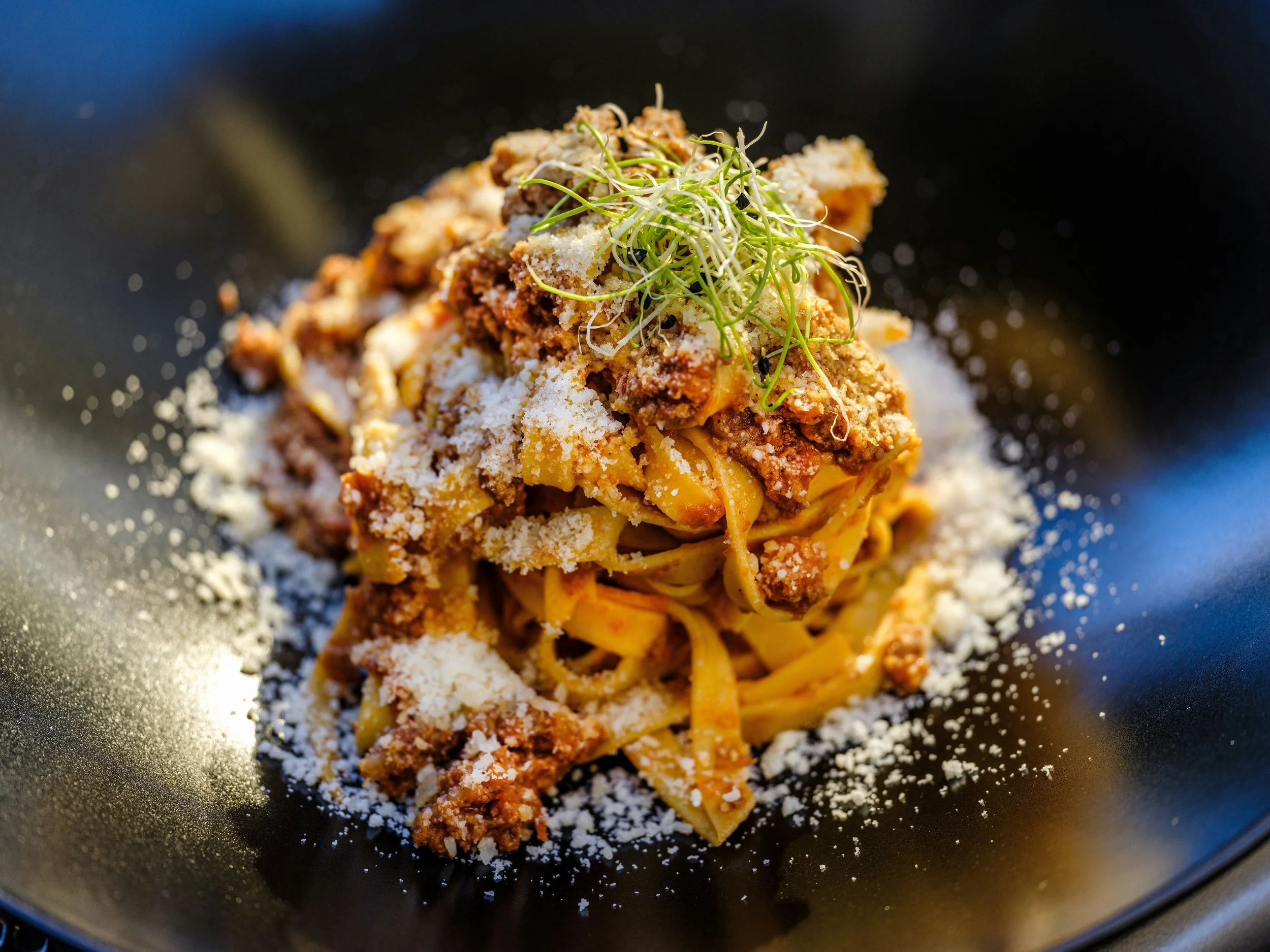
This is undoubtedly the best bolognese you’ll ever make or eat.
Alright, I know. That’s a big claim. And to those of you thinking ‘I have a great bolognese recipe’ or perhaps even ‘no, my Nonna’s bolognese recipe is the best’, I have only this to say: it is a fundamental truth that my Nonna’s recipe is the best and that your Nonna is an inferior imitation of my Nonna on her best day, and a charlatan and fraud on her worst. The upside of this is that it’s as true when you say it, as when I do. Scientists call this the ‘Nonna Paradox’. I won’t go into the quantum mechanics of it here, just accept it and move on. This recipe has been passed down from my nonna, to my father, and now to me. I tend to be a hard-line rationalist in most matters, but there’s something I can’t logically explain: everyone who makes this recipe will get a different result. My nonna’s bolognese tastes different from my dad's, which tastes different from my aunty's, which is different from mine, even when we follow the exact same recipe. Yours will be different too, even if you follow this recipe exactly, down to the brand. That’s not a bug, it’s a feature.
Enjoy, your bolognese is a reflection of your soul. And if it’s bad … take a moral inventory and try again. Bon appetito.
Ingredients
To cook
• 500 grams pork mince
• 500 grams beef or veal mince.
• 1400 grams passata (I prefer Mutti. Good quality canned tomatoes will work as well)
• A generous dollop of tomato paste
• 6 celery sticks (I’ve never measured this, but you want slightly more veg than meat by volume)
• 6 carrots
• 1–2 large onions (any colour)
• 5 cloves of garlic
To serve
• A generous knob of butter (as generous as your belief system/arteries will permit)
• Grating cheese (Parmigiano Reggiano or Grana Padano)
• Pasta—per serving size (100g per person plus an extra 100 grams of wiggle room is a good rule of thumb)
Method
1 Dice all your vegetables—how finely is personal preference.
2 Put all the vegetables, except the garlic, in a big pot over medium-high heat. You’re not trying to colour it, just sweat it out—about 5-10 minutes.
3 In a separate pan, over very high heat, sear half your meat, breaking it up as you go. Do this in batches to avoid overcrowding. If dishes are a concern, wait till your veg has cooked down, then remove it and sear in the same pot. I also think a bit of seared meat flavour adds to the final dish. The meat you don’t sear you can add straight to the veg and let it brown gently in the pan, breaking it up as you go.
4 In your meat pan or in a cleared space at the bottom of your pot, deposit your tomato paste directly onto the metal. Allow this to caramelise and deepen in colour and flavour for a few minutes but be careful not to burn it.
5 Add the diced garlic to the tomato paste and let that get some dry heat for a few minutes.
6 Add your passata and then top off with water until all the ingredients are submerged with a centimetre or so of water on top.
7 Put a lid on, cracked so some moisture can escape, and bring to a low simmer.
8 Simmer for 3–6 hours, stirring every 15 minutes or so to make sure nothing is sticking to the bottom. Yes. 3–6 hours. No shortcuts. If it starts to look too dry, add a little water.
9 Once you’ve simmered it for long enough that the acidity from the tomatoes has given way to sweetness and umami, you can take the lid off and continue to simmer until the sauce has reduced to your desired consistency. I prefer it relatively thick.
10 To serve: boil your pasta until just shy of al dente, then strain it and return it to the pot, off heat. Add your desired amount of sauce and a generous knob of butter, stirring vigorously until it has melted into the sauce.
11 Plate up and top with cheese to taste.
There you go, the best recipe for bolognese you’ll ever make or eat. If it wasn’t, I’m afraid to say you did it wrong. That, or you have a serious defect in the fibre of your being, perhaps one requiring a therapist or priest. Enjoy!